Polars Lazy Execution: More Than a Faster pandas
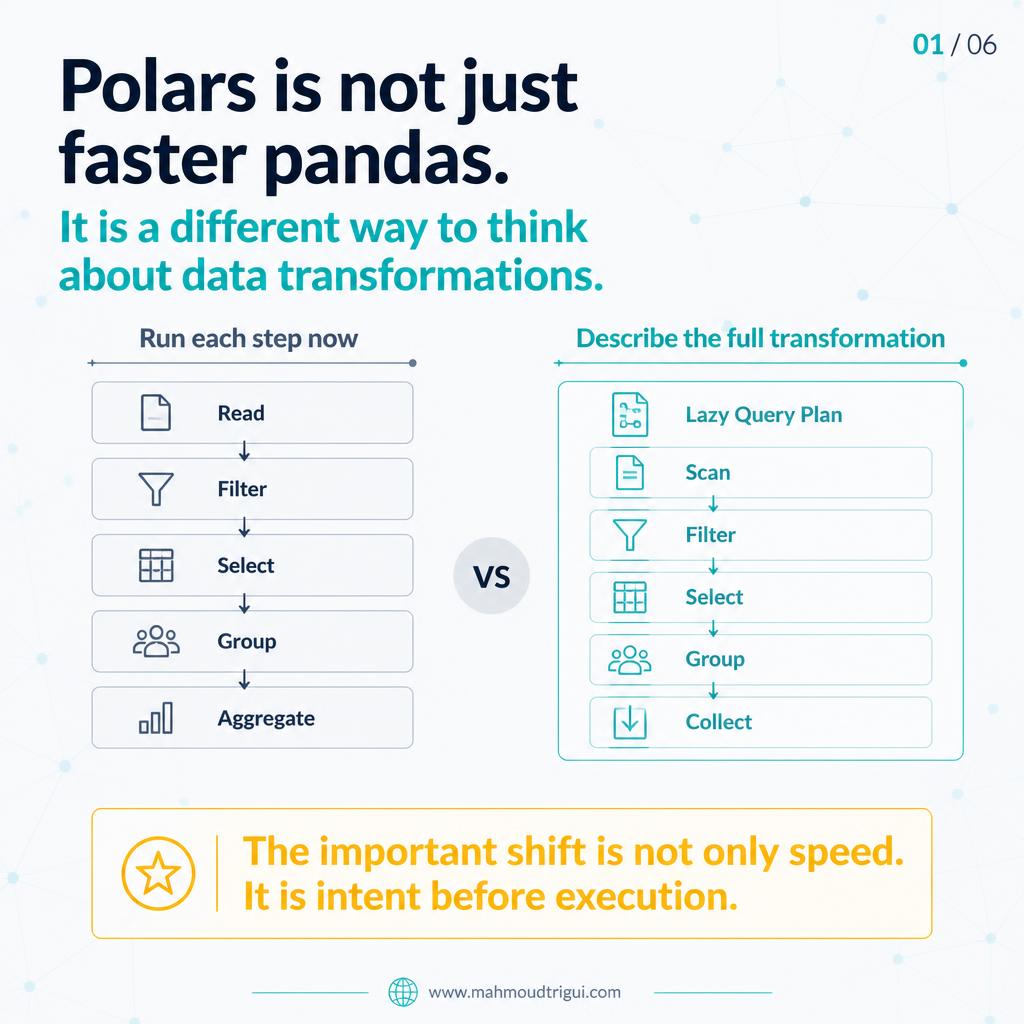
Speed is the first reason people try Polars, but the real shift is the execution model: lazy mode separates what transformation you need from how it runs.
TL;DR: Lazy execution is not just about speed. It separates transformation intent from execution strategy: you say what transformation you need, and the engine decides how to run it, optimising the whole plan before anything executes. For repeatable data preparation and feature-engineering pipelines, that mental model change matters more than any single benchmark. Eager tools remain practical for exploration — choose per workflow and benchmark on your own data.
Visual Summary
The Problem
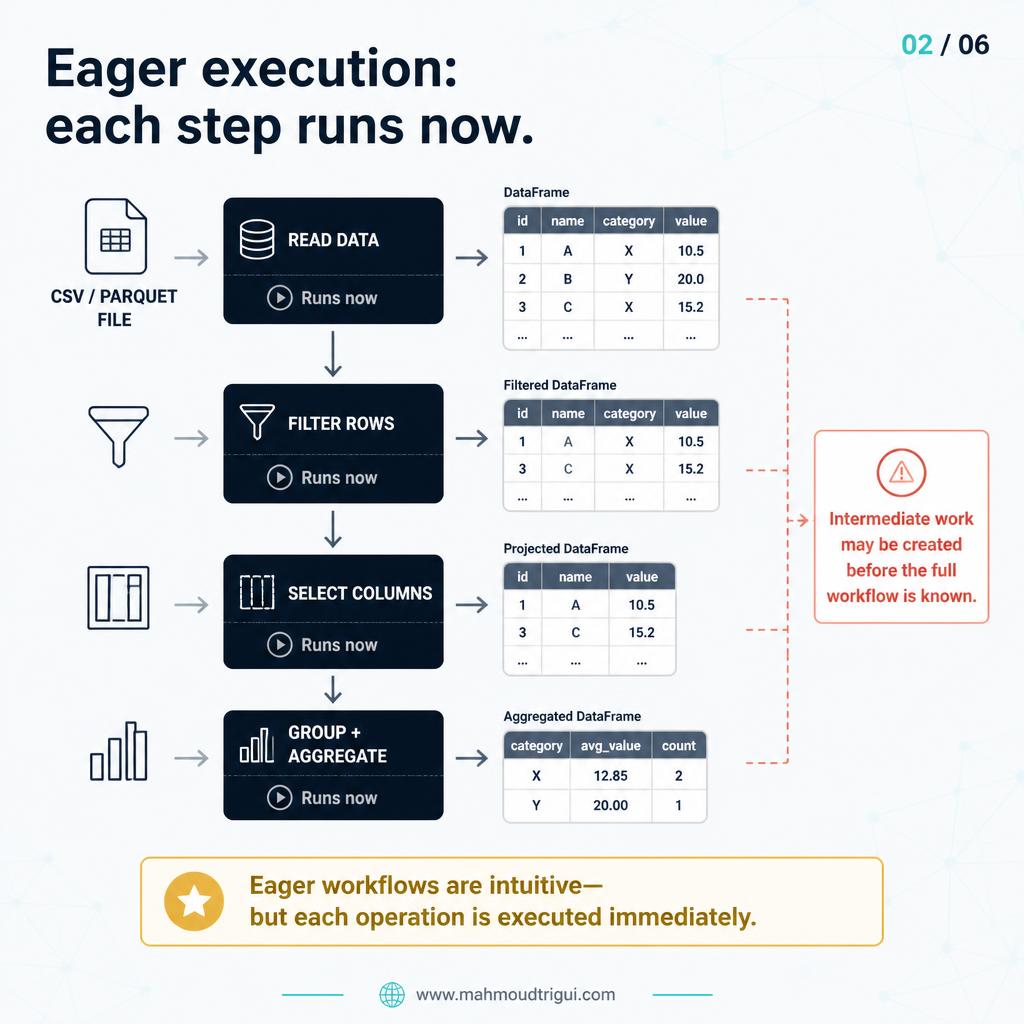
Most data work starts with pandas. Every operation executes immediately: read the file, filter rows, select columns, group data, aggregate results. That eager mental model is intuitive — you run a step and inspect the result.
But for repeatable data preparation or feature-engineering pipelines, each step runs before the full workflow is even known. The engine builds intermediate dataframes that the downstream query may never need, and it can never see the whole picture in advance.
The Approach
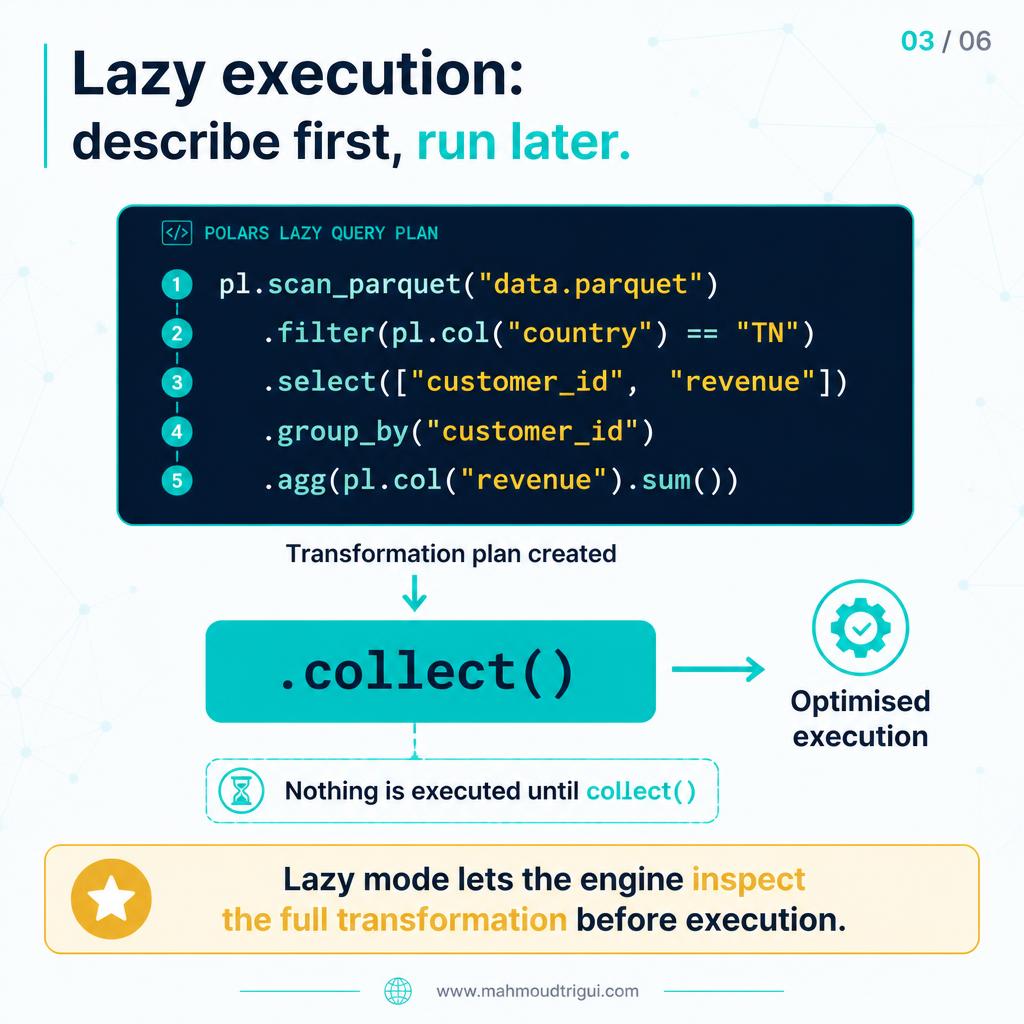
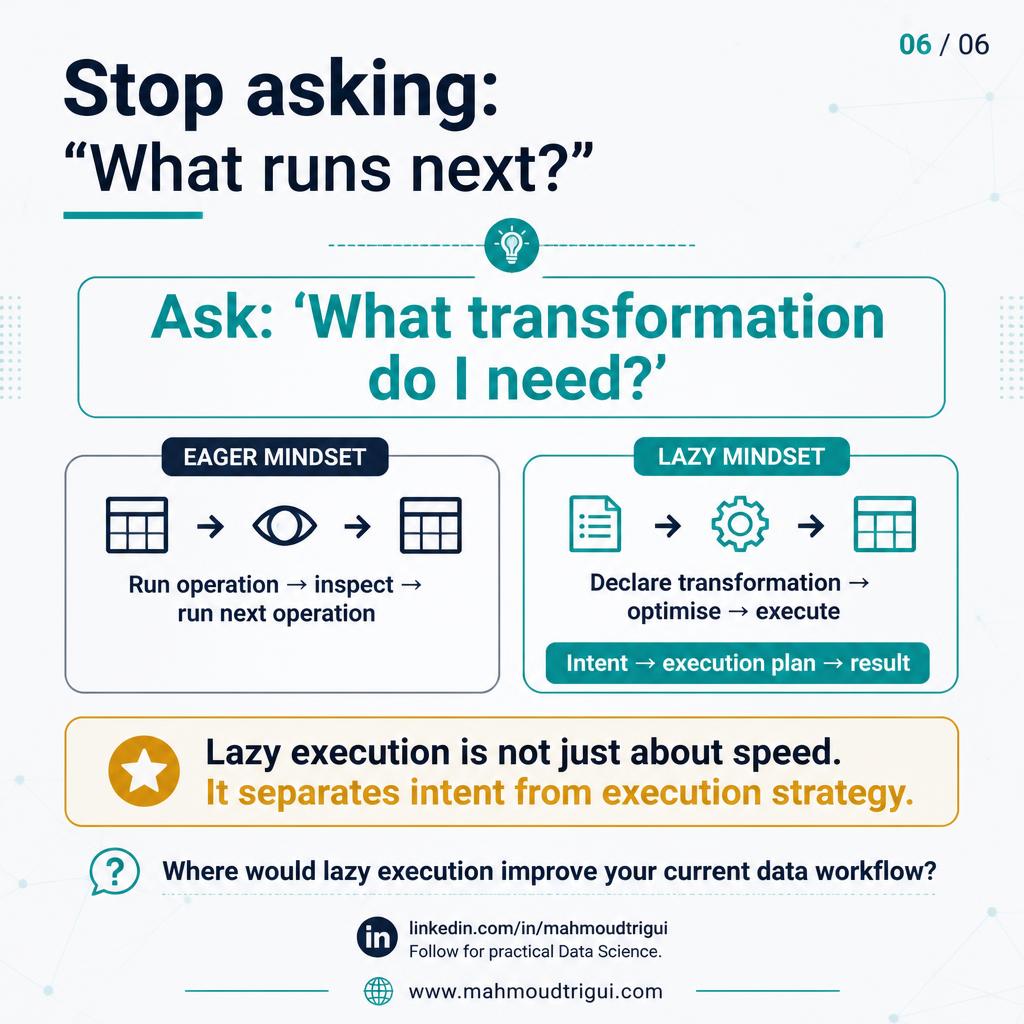
I stopped asking "what DataFrame operation should I run next?" and started asking
"what transformation do I need?" With Polars lazy mode, I describe the full transformation
first. Execution starts only when I call collect() — and only then does the
engine inspect the entire query and optimise the plan before running anything.
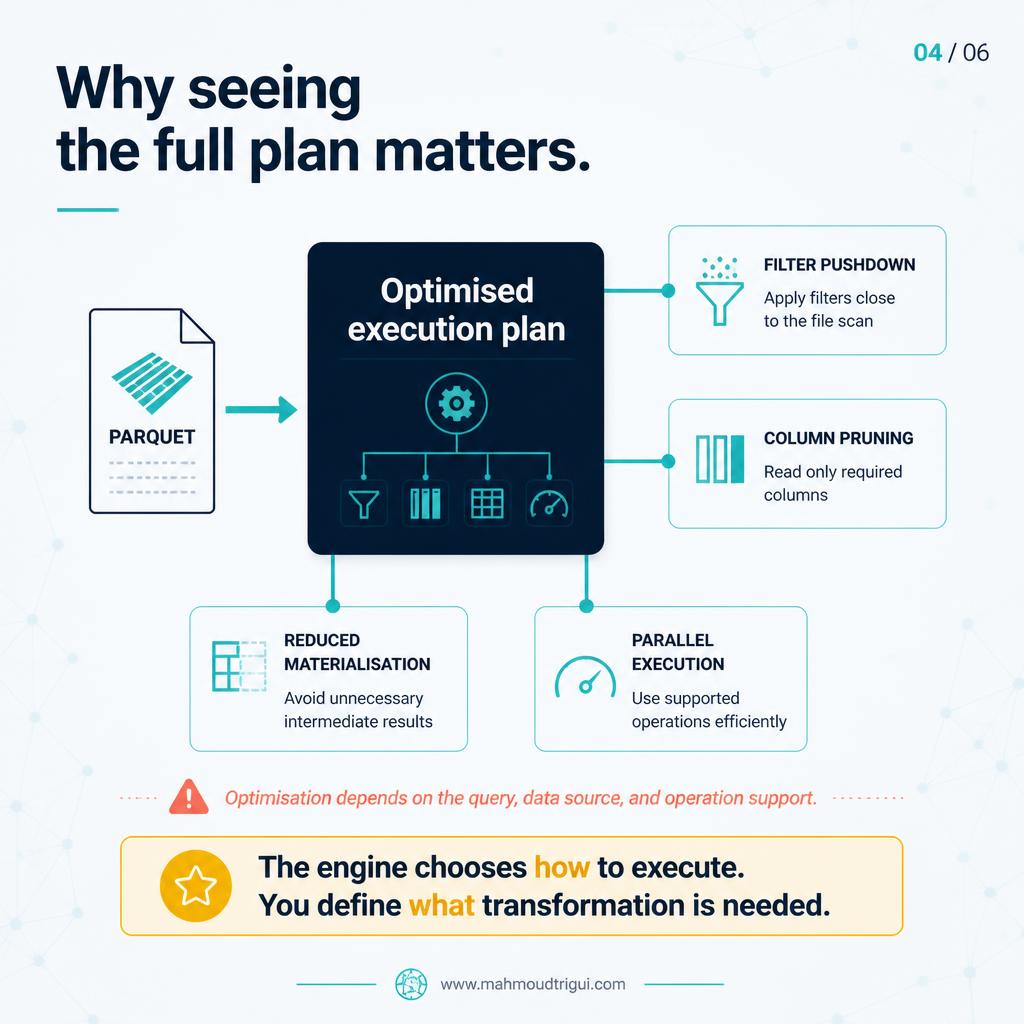
Read only what the query needs
Column pruning limits the scan to the columns required downstream instead of loading the whole file into memory.
Push filters close to the scan
Filter predicates run as early as possible, reducing the rows that move through the rest of the pipeline.
Avoid unnecessary materialisation
Intermediate dataframes are only produced when something in the plan actually needs them — no throwaway copies.
Parallelise supported operations
Operations that can run across threads are distributed automatically, so a large pipeline uses the hardware it has.
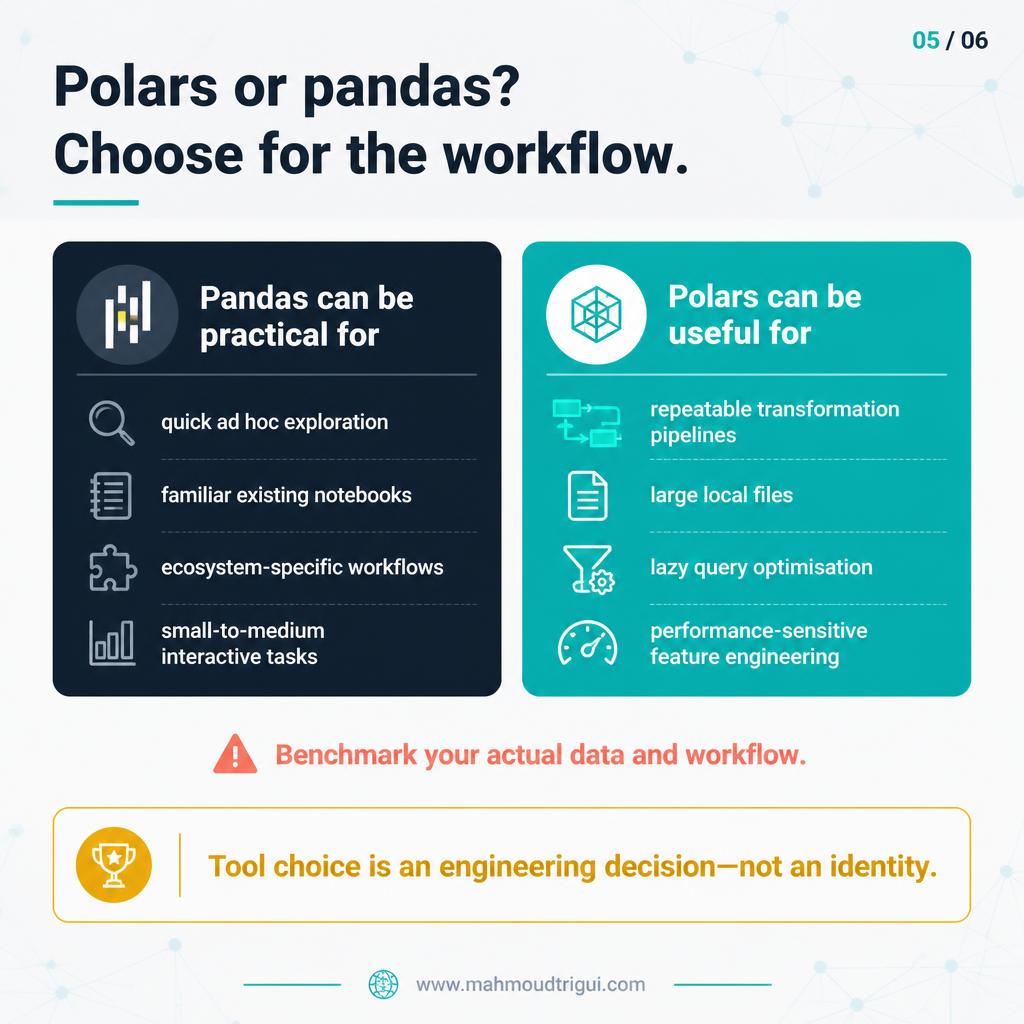
That does not mean Polars always wins. Performance depends on the dataset, the query, the file format, available memory, library versions, and the surrounding workflow. And pandas remains a practical choice for quick ad-hoc exploration, familiar notebooks, mature ecosystems, and teams already built around it. Benchmark your actual data and workflow.
Outcome
The real shift landed in how I think about pipelines. Instead of running one operation and inspecting its result, I declare the transformation and let the engine build an execution plan. Optimisations like filter pushdown, column pruning, reduced materialisation, and parallel execution become engine responsibilities — not mine.
For repeatable data preparation and feature-engineering pipelines, that mental model change matters as much as any single speed-up: intent comes before execution strategy.
Key Takeaway
Design insight: Lazy execution is not just about speed. It separates transformation intent from execution strategy: you say what transformation you need, and the engine decides how to run it, optimising the whole plan before anything executes. For repeatable data preparation and feature-engineering pipelines, that mental model change matters more than any single benchmark. Eager tools remain practical for exploration — choose per workflow and benchmark on your own data.
FAQ
What is the key takeaway from "Polars Lazy Execution: More Than a Faster pandas"?
Lazy execution is not just about speed. It separates transformation intent from execution strategy: you say what transformation you need, and the engine decides how to run it, optimising the whole plan before anything executes. For repeatable data preparation and feature-engineering pipelines, that mental model change matters more than any single benchmark. Eager tools remain practical for exploration — choose per workflow and benchmark on your own data.
Who wrote this and what is it about?
This was written by Mahmoud Trigui, Senior Data Scientist. Polars lazy execution separates transformation intent from execution strategy — not just faster pandas, a better way to build data and feature-engineering pipelines.