When to Adopt a Feature Store: Pain Before Platform
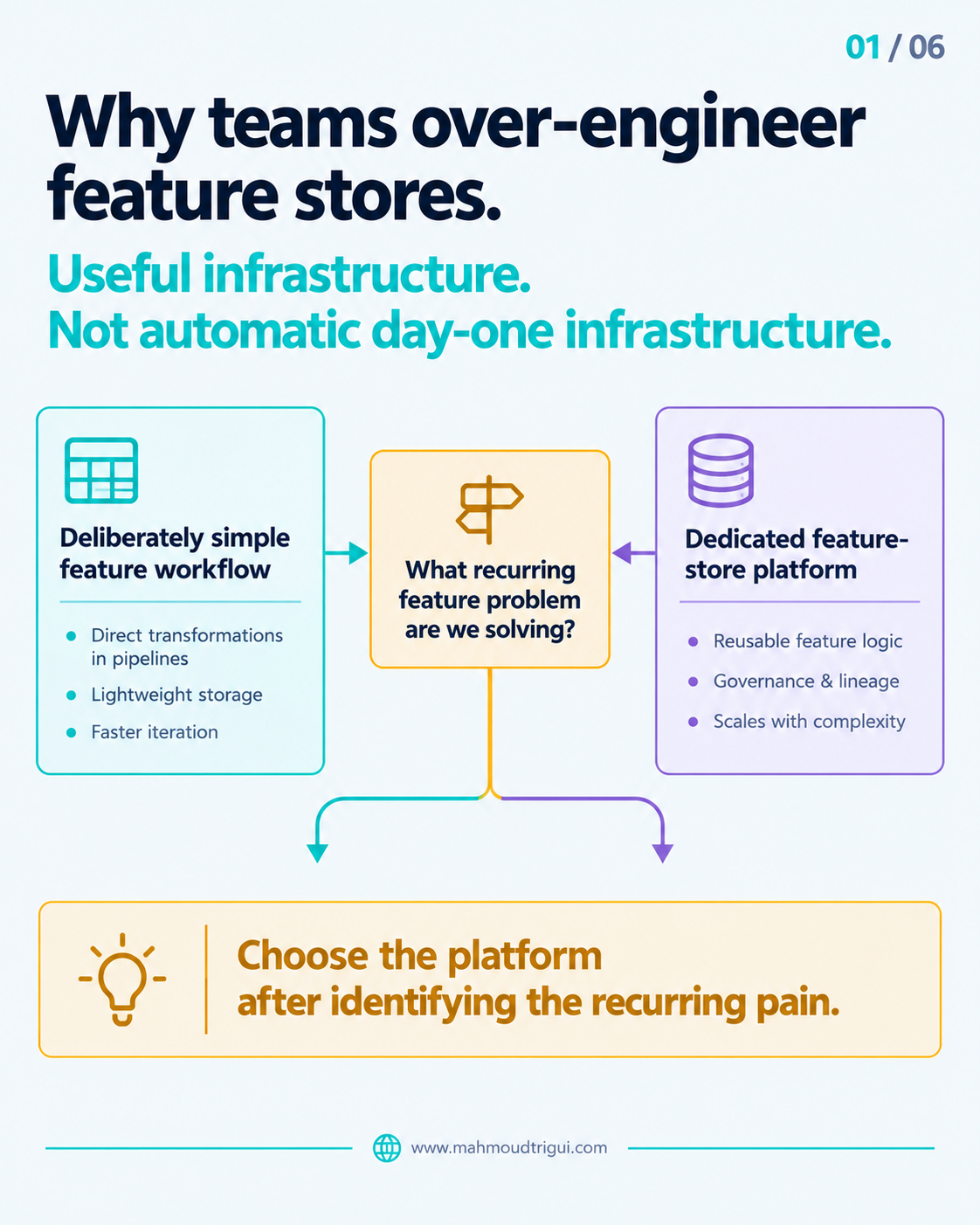
A feature store is valuable infrastructure, not automatic day-one infrastructure. Buy it when it removes recurring operational friction, not when it makes the architecture diagram look more complete.
TL;DR: A feature store is valuable infrastructure, not automatic day-one infrastructure. Start lean with versioned feature definitions, documented logic, and reproducible code. Only adopt a dedicated feature-store platform when recurring pain exists—repeated rebuilds, training-serving drift, governed reuse across teams, or real-time serving with predictable latency. The question is not “Do mature teams use feature stores?” but “What recurring operational pain would this remove for us?” Buy infrastructure to remove repeated friction, not to polish the architecture diagram.
Visual Summary
The Problem
A feature store is valuable infrastructure. It is not automatically day-one infrastructure. Many ML teams reach for a feature-store platform before they have the recurring problems it is designed to solve.
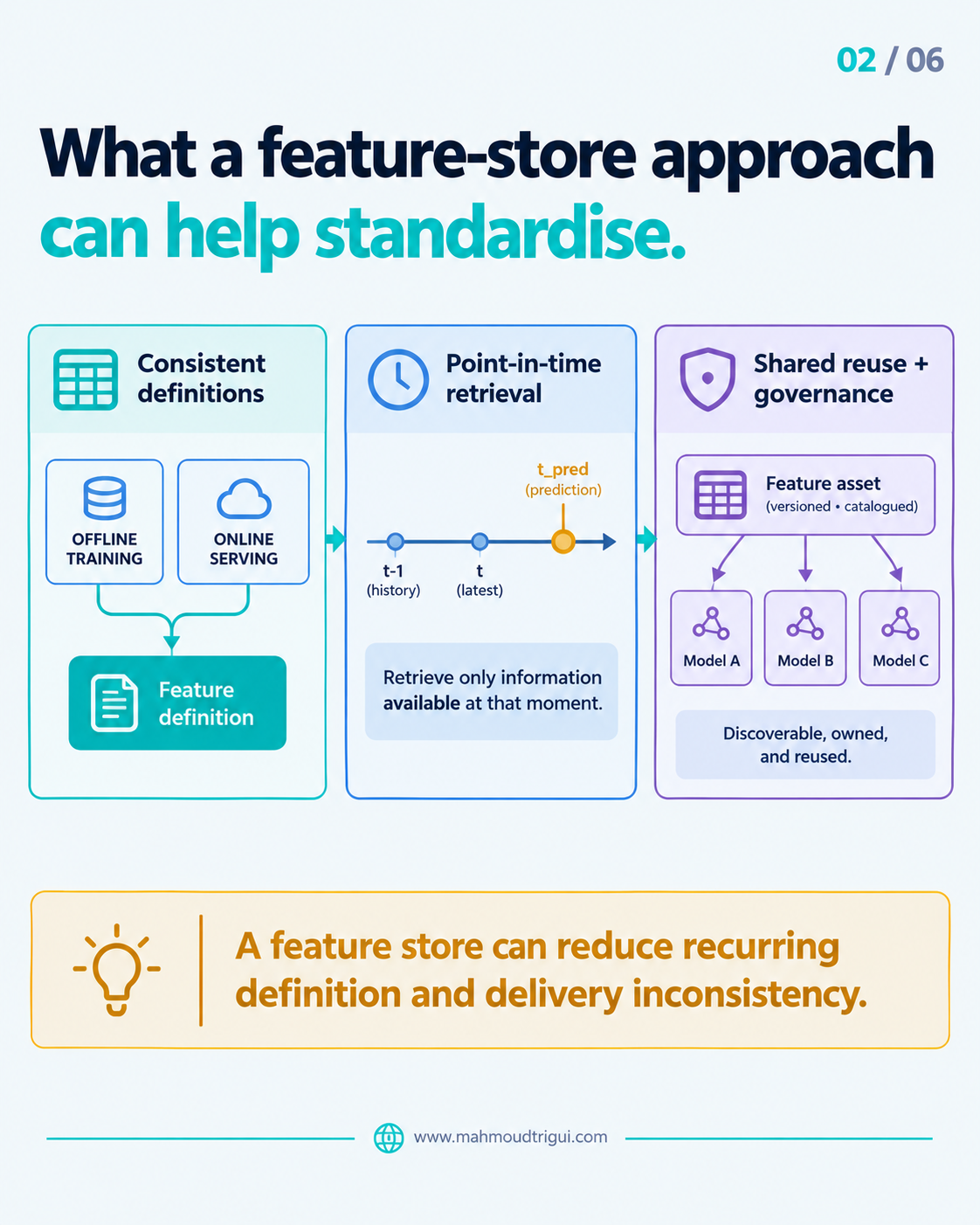
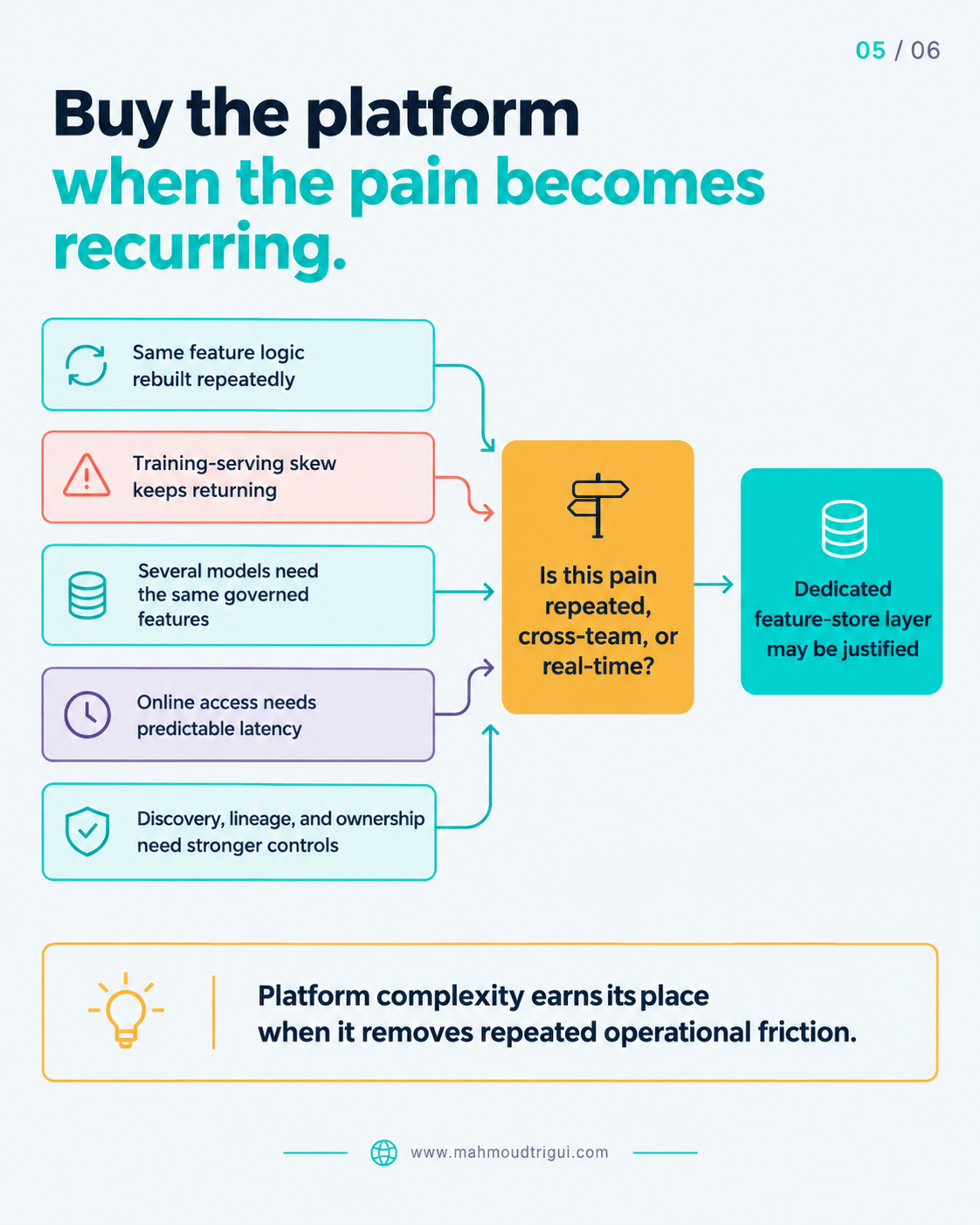
Feature stores help when you need consistent feature definitions across training and serving, point-in-time historical retrieval, shared features reused by several models or teams, online feature access with predictable latency, and ownership, discovery, lineage, and governance around feature assets. Those are real problems.
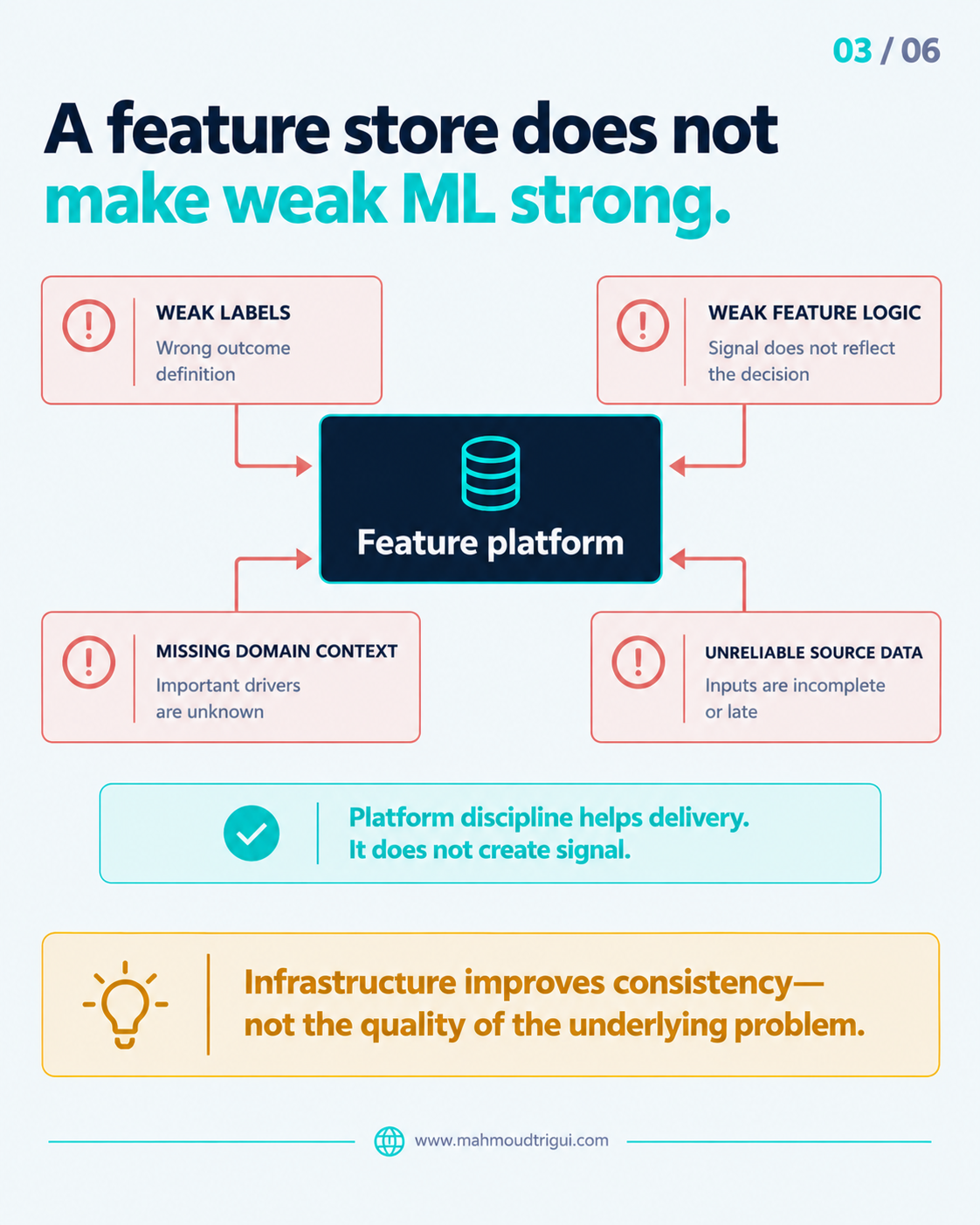
But a feature store does not fix weak labels, weak feature logic, missing domain knowledge, unclear model ownership, unrealistic validation, or bad source data.
The Approach
Start lean when reuse is limited
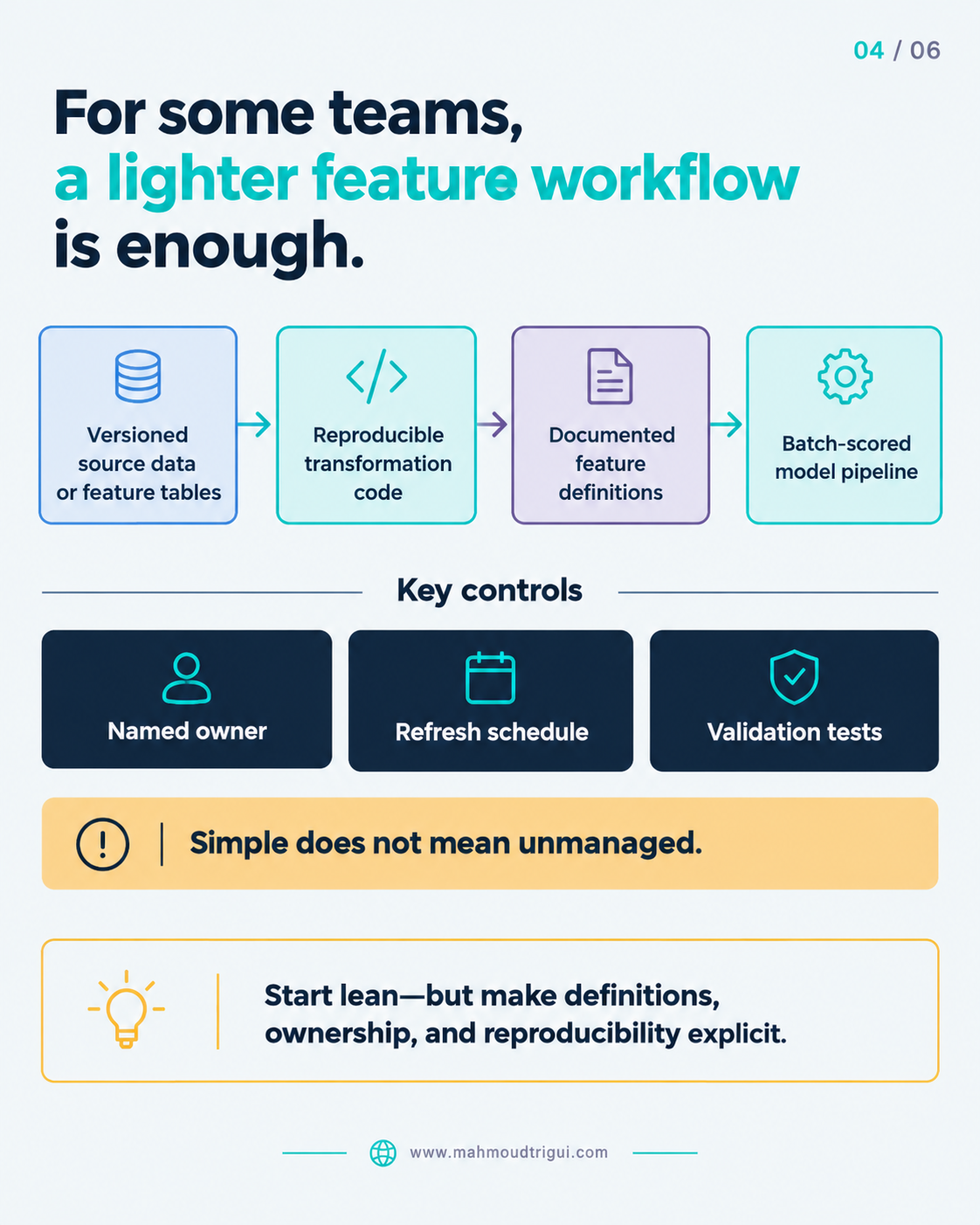
For a small number of batch-scored models with limited feature reuse, a lighter setup is often enough: versioned datasets or feature tables, documented feature definitions, reproducible transformation code, training-serving tests where relevant, and clear owners and refresh schedules. Simple does not mean unmanaged.
Make consistency deliberate
Even without a dedicated platform, you can prevent training-serving skew by treating feature definitions as code, versioning them, and reusing the same transformation logic for offline and online paths where both exist.
Adopt a platform only when pain recurs
A dedicated feature-store layer starts to earn its cost when the same feature logic is repeatedly rebuilt, online and offline definitions drift, multiple teams need governed reuse, or real-time serving creates operational consistency requirements.
Ask the right question
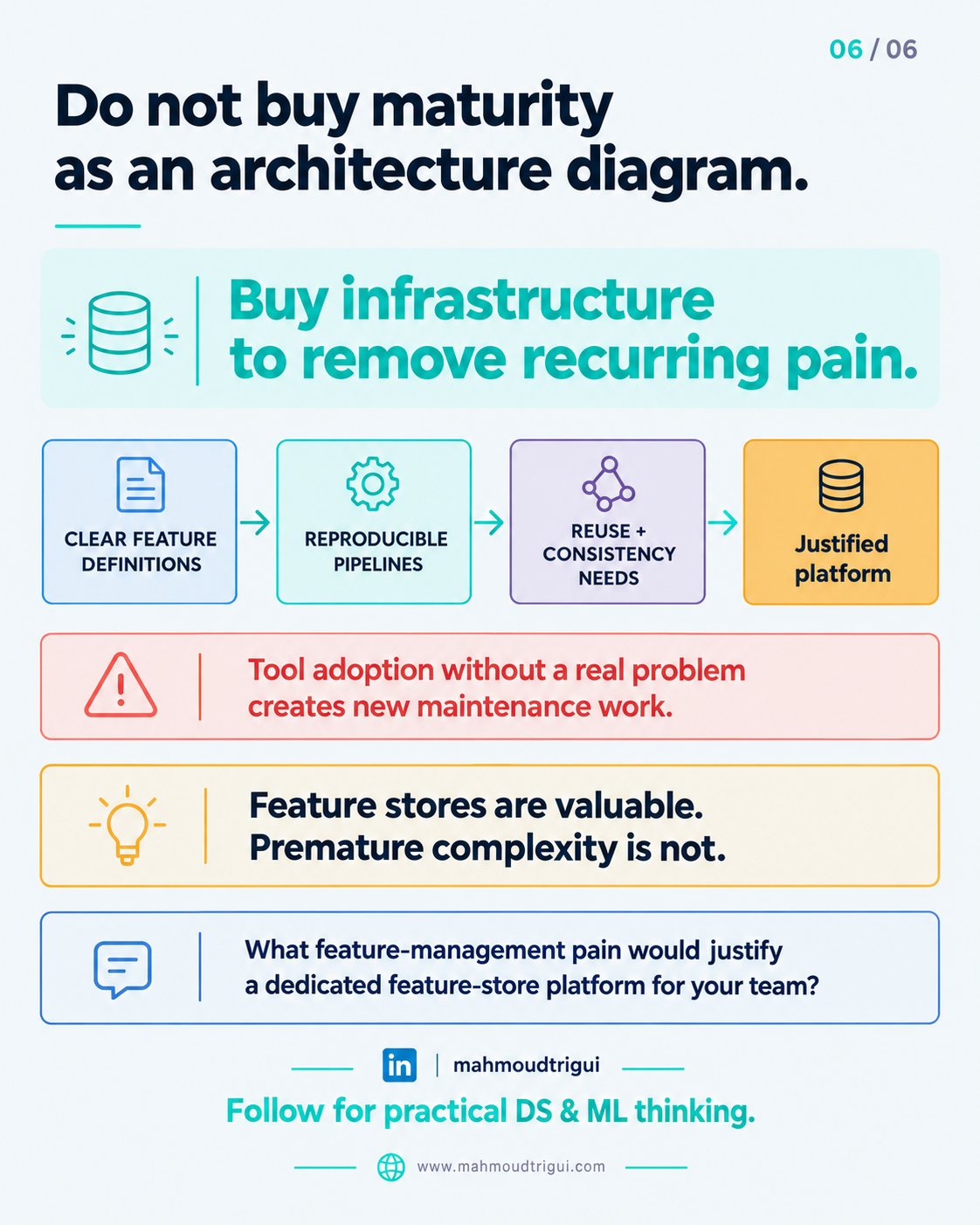
The question is not “Do mature ML teams use feature stores?” Many do. The useful question is: “What recurring operational pain would this platform remove for us?”
Outcome
By separating delivery discipline from signal quality, you avoid premature complexity. You invest in infrastructure to remove repeated friction, not to make the architecture diagram look more complete. The result is leaner maintenance, clearer ownership, and a platform you adopt for a reason—not by default.
Key Takeaway
Design insight: A feature store is valuable infrastructure, not automatic day-one infrastructure. Start lean with versioned feature definitions, documented logic, and reproducible code. Only adopt a dedicated feature-store platform when recurring pain exists—repeated rebuilds, training-serving drift, governed reuse across teams, or real-time serving with predictable latency. The question is not “Do mature teams use feature stores?” but “What recurring operational pain would this remove for us?” Buy infrastructure to remove repeated friction, not to polish the architecture diagram.