Better Tools, Same Forecasting Principles
Better forecasting tools speed up the workflow, but they don't replace the fundamentals: realistic validation, domain knowledge, feature design, and honest comparison.
TL;DR: Tools amplify judgment; they don't replace it. The evolution is same forecasting principles, more leverage. Focus on prediction horizon, availability at prediction time, relevance of history, business drivers, time-aware validation, and whether incremental value justifies complexity.
Visual Summary
The Problem
Rebuilding an older forecasting workflow with today's tools makes it obvious how much manual friction has disappeared. But the difficult decisions haven't. Many teams mistake faster baselines for "better models". The real question is whether added complexity improves the forecast that will actually be used.
The Approach
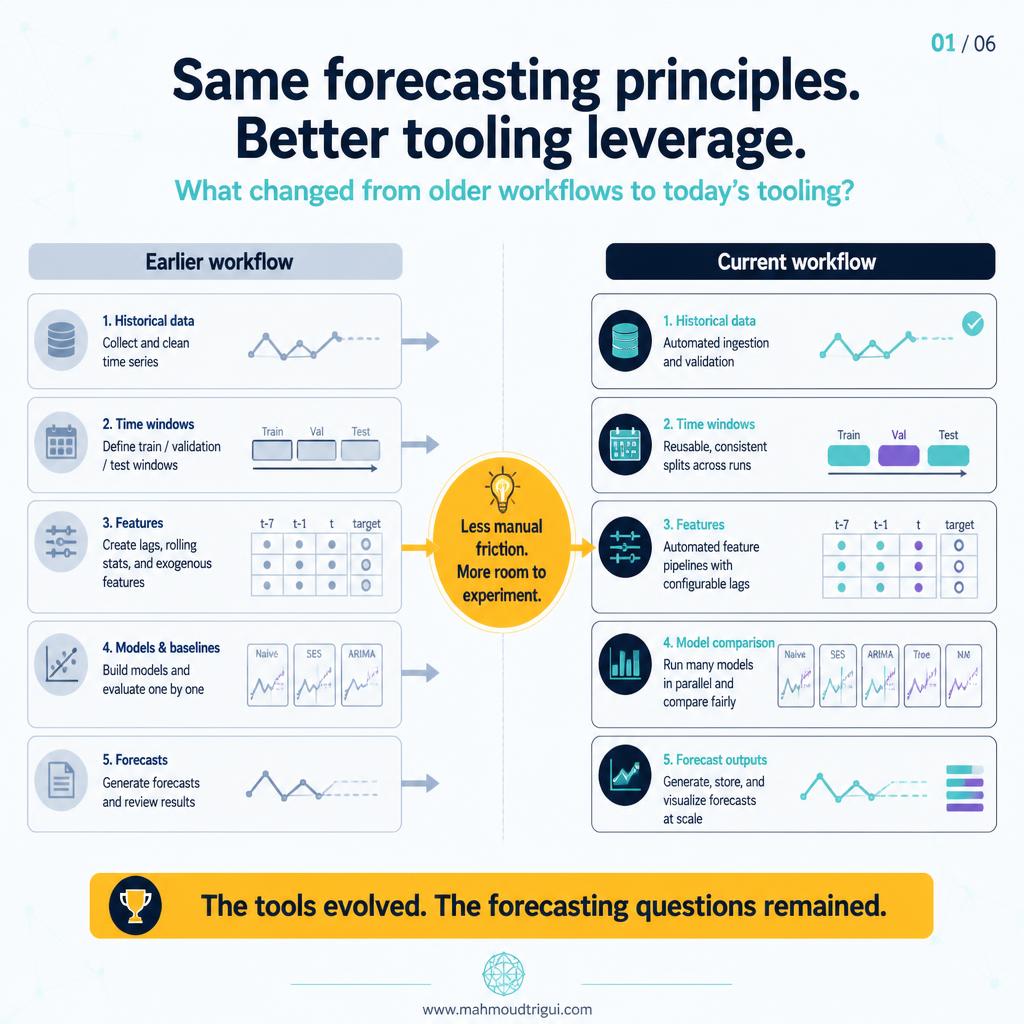
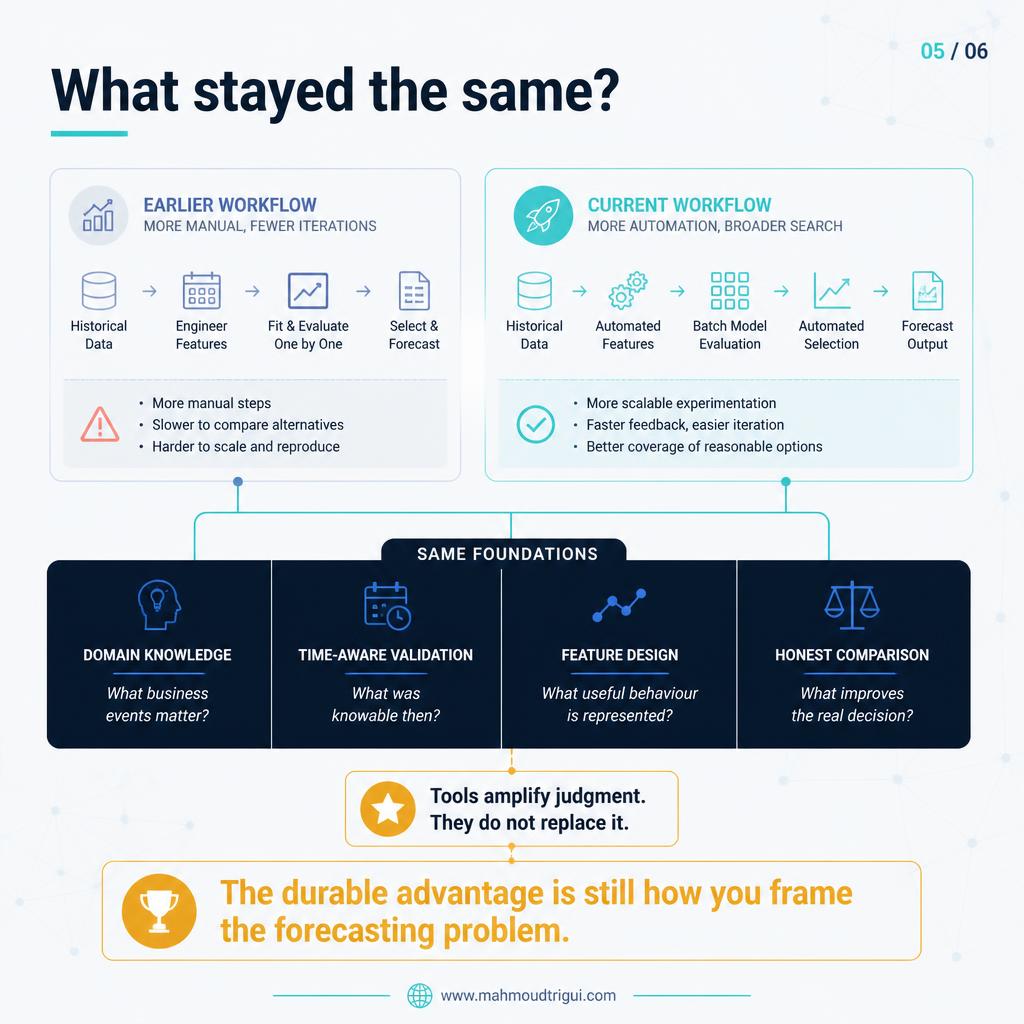
Rather than abandoning what worked, I compare the evolution. Both eras wrestle with the same core questions.
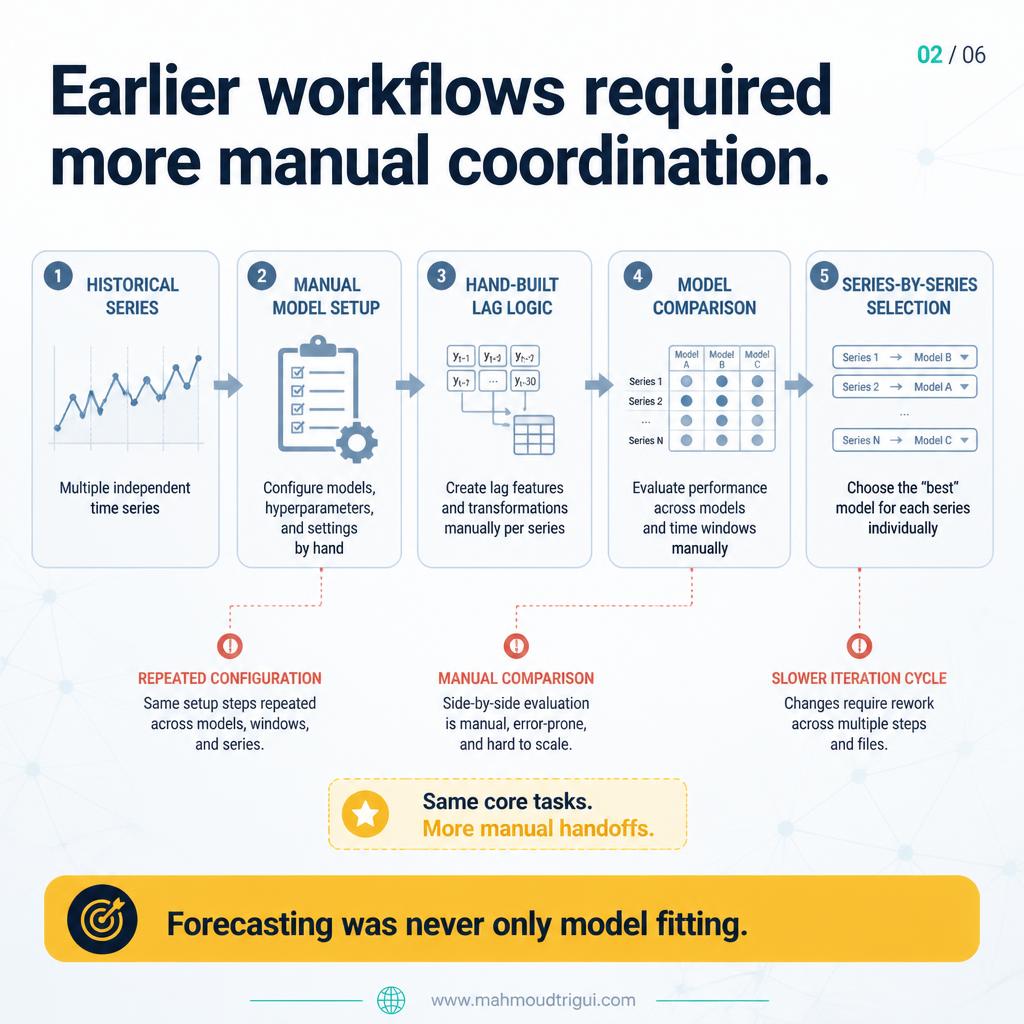
Earlier workflows
More manual effort around lags, rolling features, cross-series scaling, time-aware validation, and model comparison. Same tasks, just slower iteration.
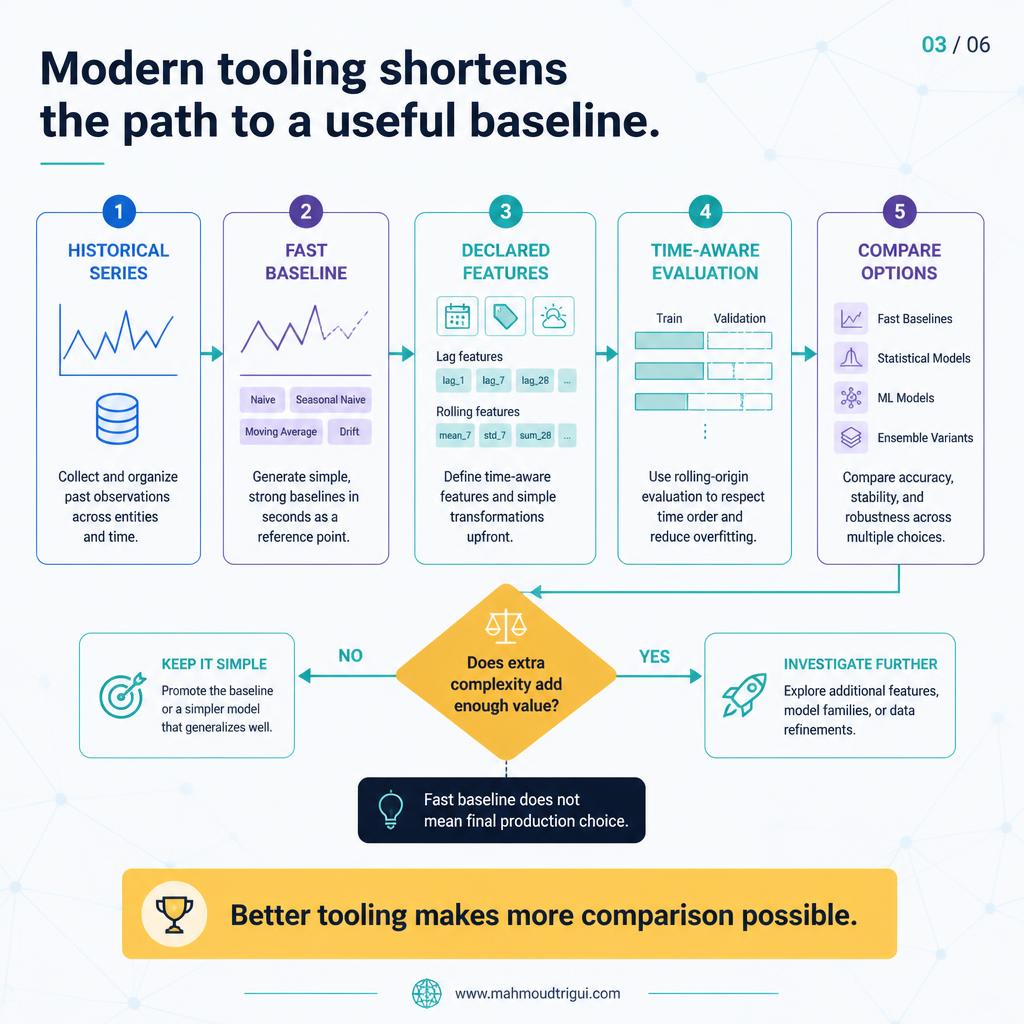
Modern tooling
Establishing a strong baseline is fast, feature transformations are more systematic, and it's easier to evaluate candidates and scale experimentation. But time-aware validation is still mandatory.
What stayed the same
Domain knowledge, realistic validation (respecting prediction time), feature design that captures relevant behaviour, and honest comparison against a baseline. These decide if a forecast is useful in operations.
Outcome
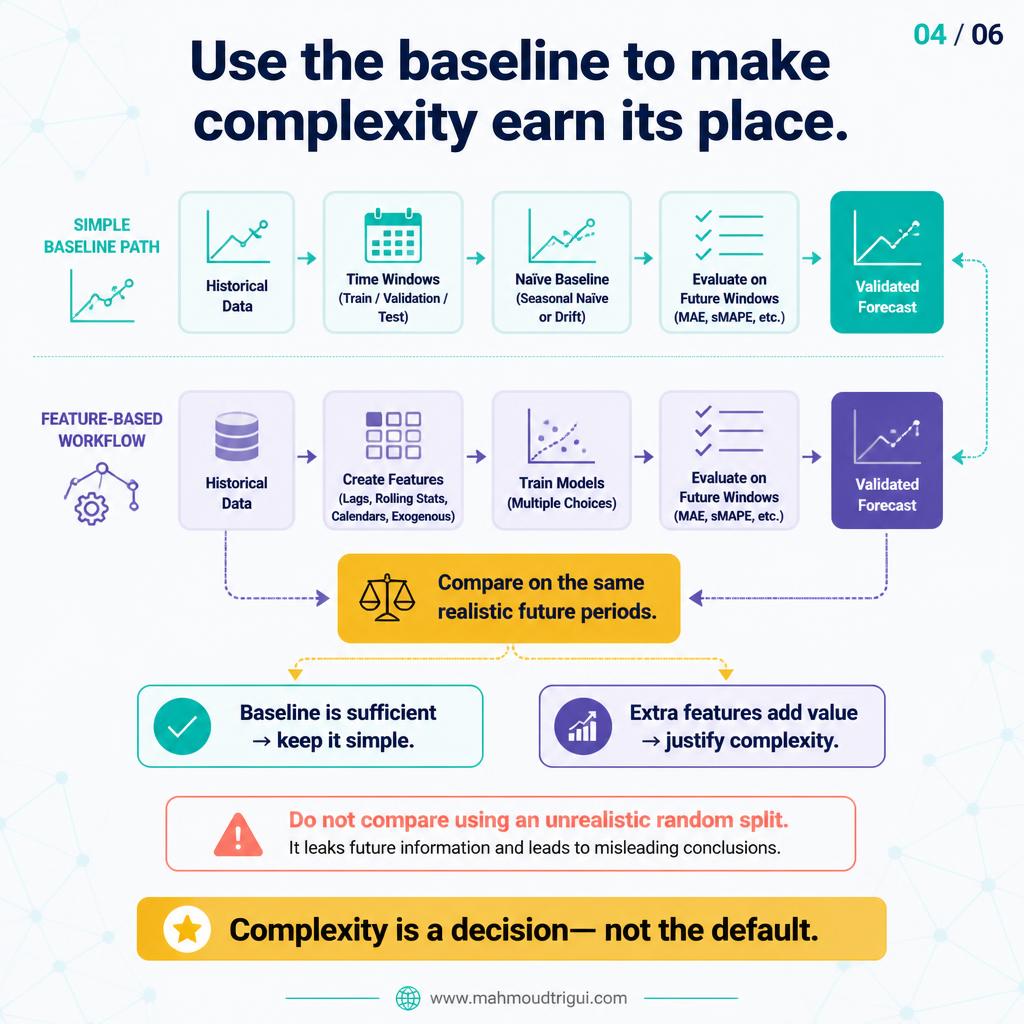
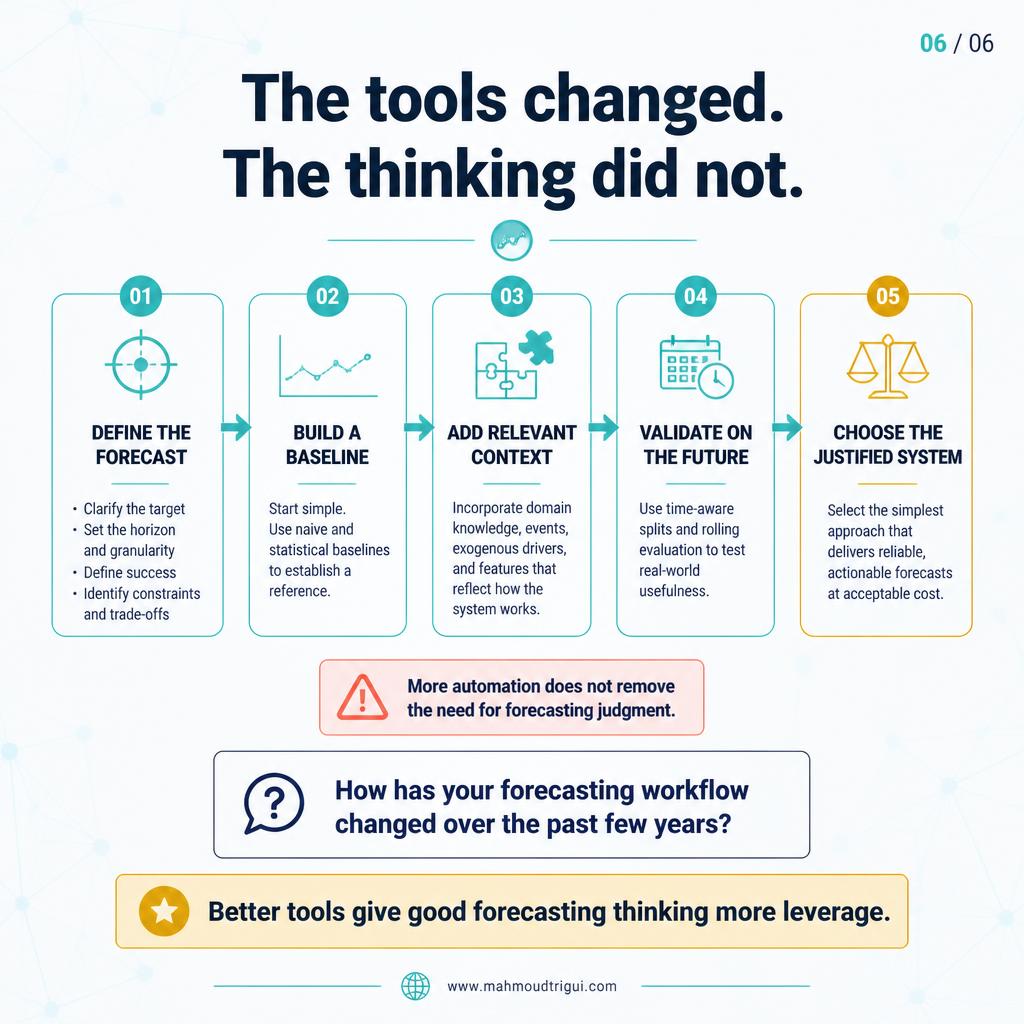
Speed is valuable, but it should serve disciplined thinking. The baseline should make complexity earn its place. If a simple, well-validated baseline beats a complex approach on realistic future periods, keep it simple.
Key Takeaway
Design insight: Tools amplify judgment; they don't replace it. The evolution is same forecasting principles, more leverage. Focus on prediction horizon, availability at prediction time, relevance of history, business drivers, time-aware validation, and whether incremental value justifies complexity.
Related
When a SQL Query Beats a Model →MLforecast Made Me Rewrite My Forecasting Pipeline → Regime-Aware Forecasting: Route Each Series by Its State → Turning Decomposition Into a Forecasting Strategy → Aggregate → Forecast → Disaggregate → Conformal Prediction: Calibrated Forecast Intervals → Foundation Models Raise the Baseline → Make a Simple Forecasting Baseline Fail First → Route Structurally Inactive Series Before Forecasting →
Comments
FAQ
What is the key takeaway from "Better Tools, Same Forecasting Principles"?
Tools amplify judgment; they don't replace it. The evolution is same forecasting principles, more leverage. Focus on prediction horizon, availability at prediction time, relevance of history, business drivers, time-aware validation, and whether incremental value justifies complexity.
Who wrote this and what is it about?
This was written by Mahmoud Trigui, Senior Data Scientist. Better forecasting tools speed up the workflow, but they don't replace the fundamentals: realistic validation, domain knowledge, feature design, and honest comparison.