AI Agents Reduce Friction, Not Judgment — A Hybrid Data Science Workflow
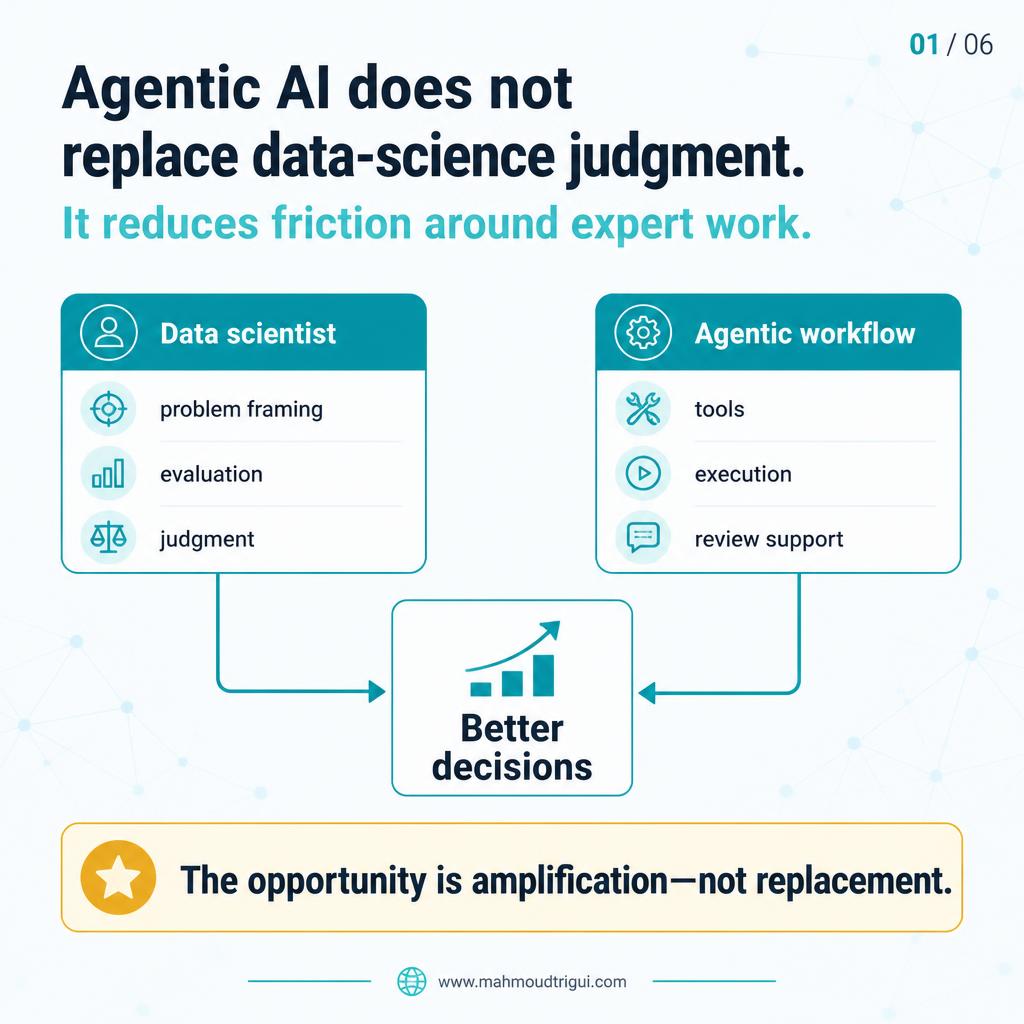
The most useful intersection is AI agents that reduce friction around data-science work, not ones that attempt to replace the expert.
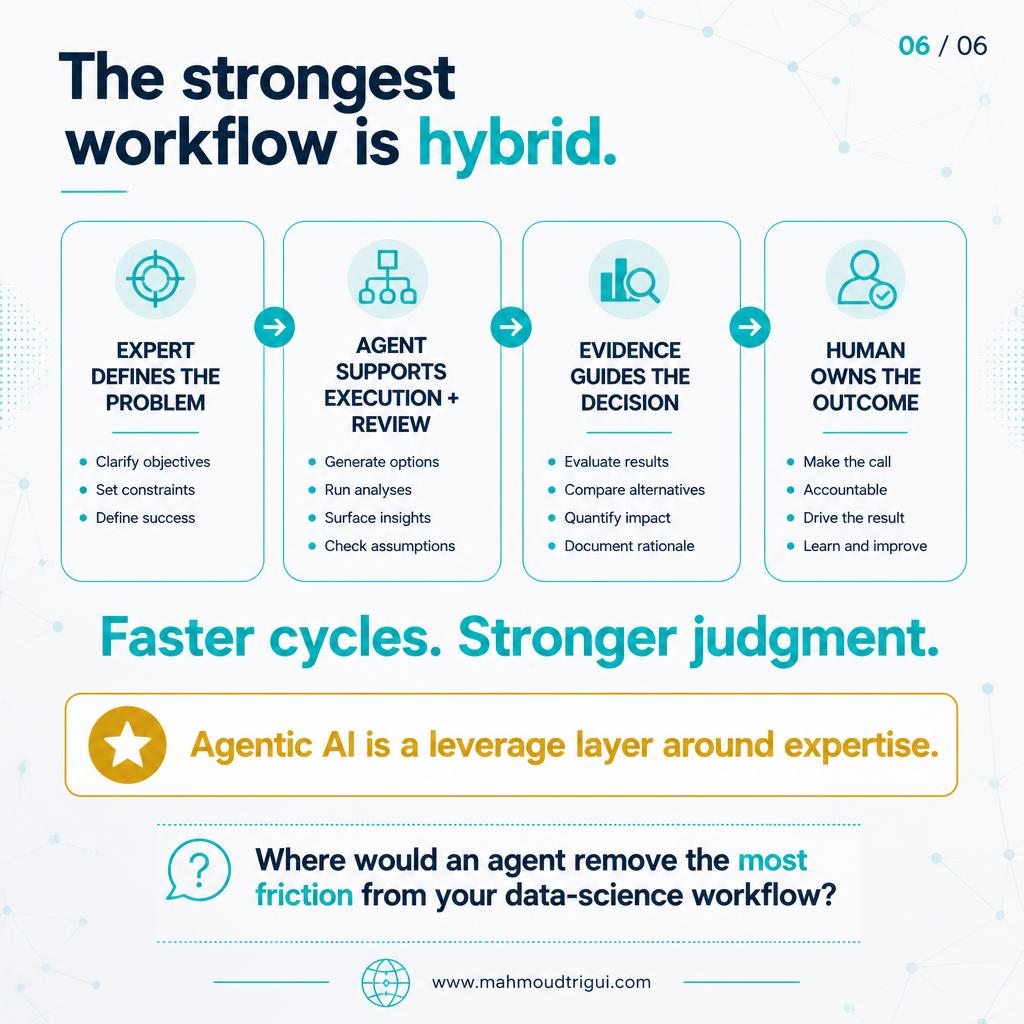
TL;DR: Agentic AI is a leverage layer around expertise — not a replacement. The strongest workflow is hybrid: expert defines the problem, agent supports execution and review, evidence informs the decision, and the human owns the outcome. When implementation becomes faster, judgment becomes more valuable.
The Problem
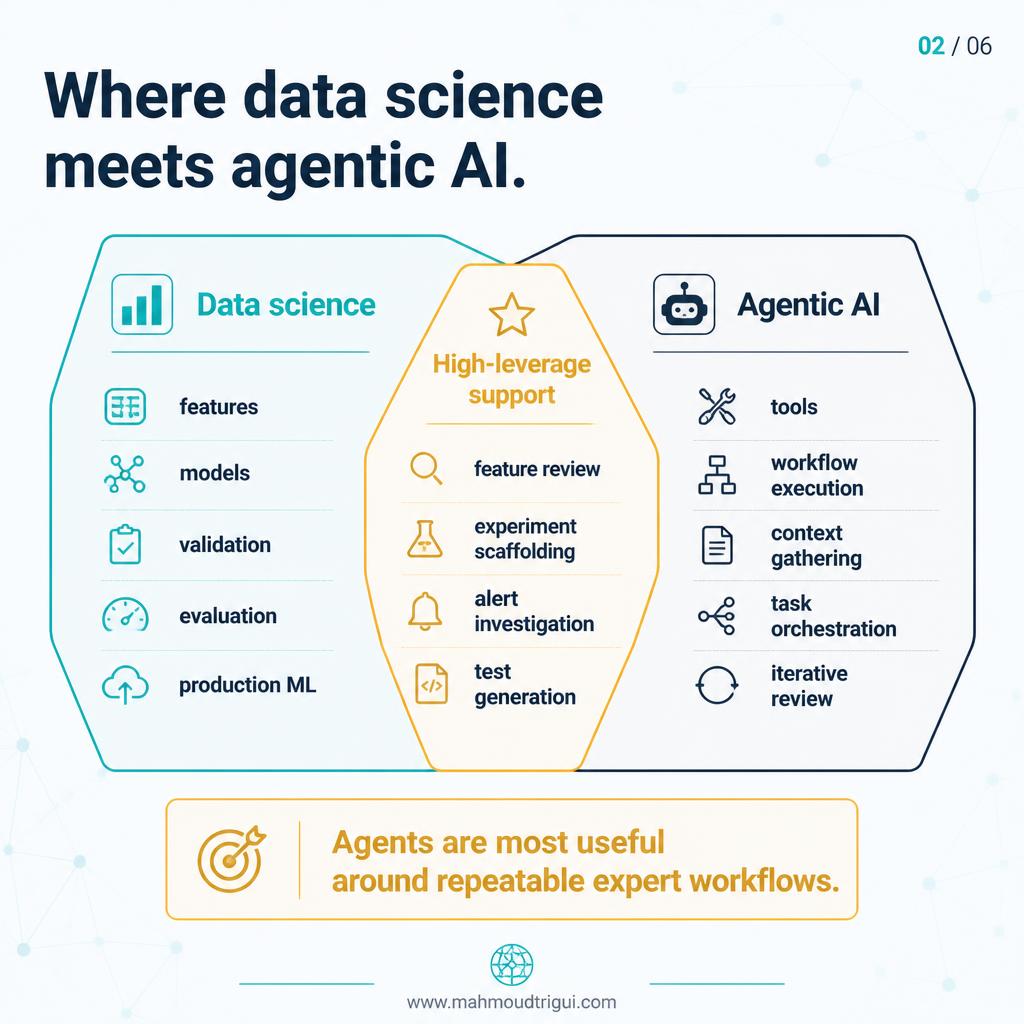
Many teams ask if AI agents will replace data scientists. The more practical question is where they remove friction without eroding judgment. Value comes from supporting modeling, experimentation, review, and production operations — not "doing ML" end-to-end.
The Approach
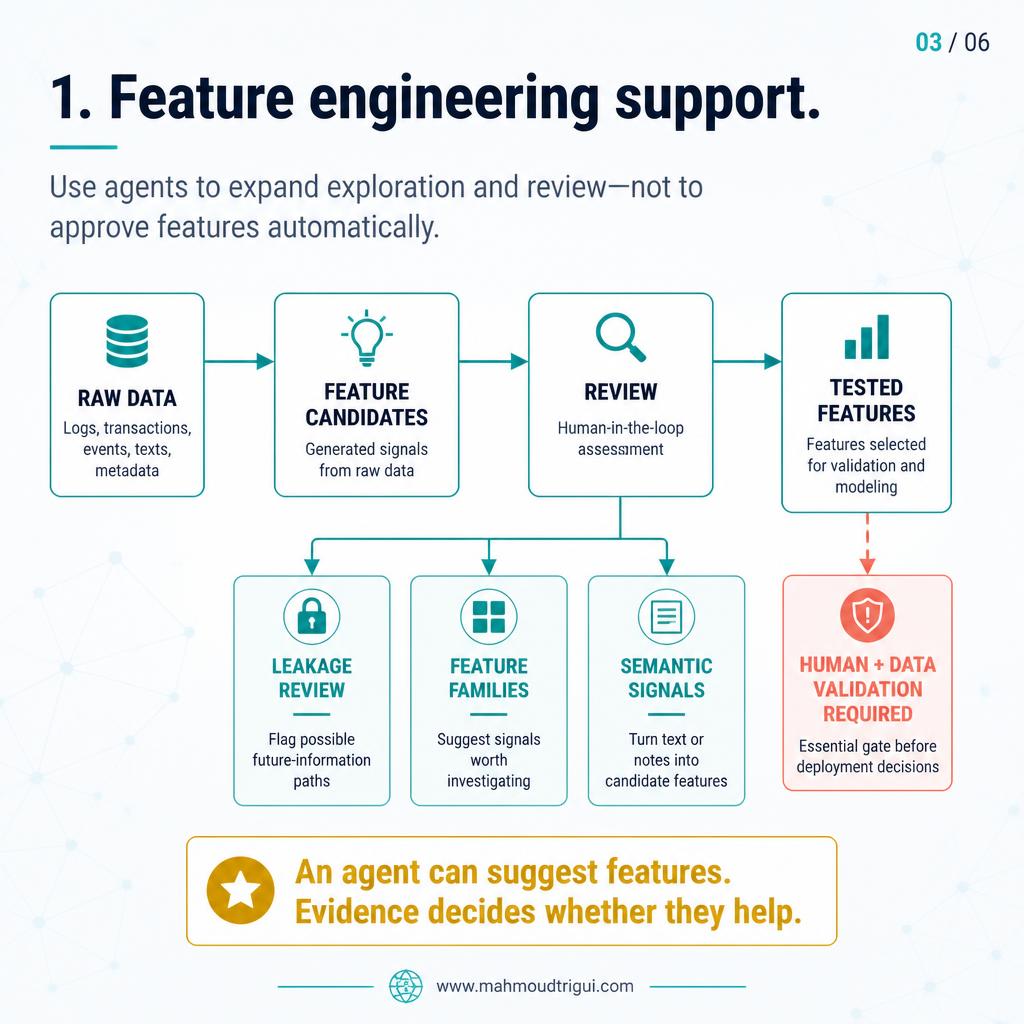
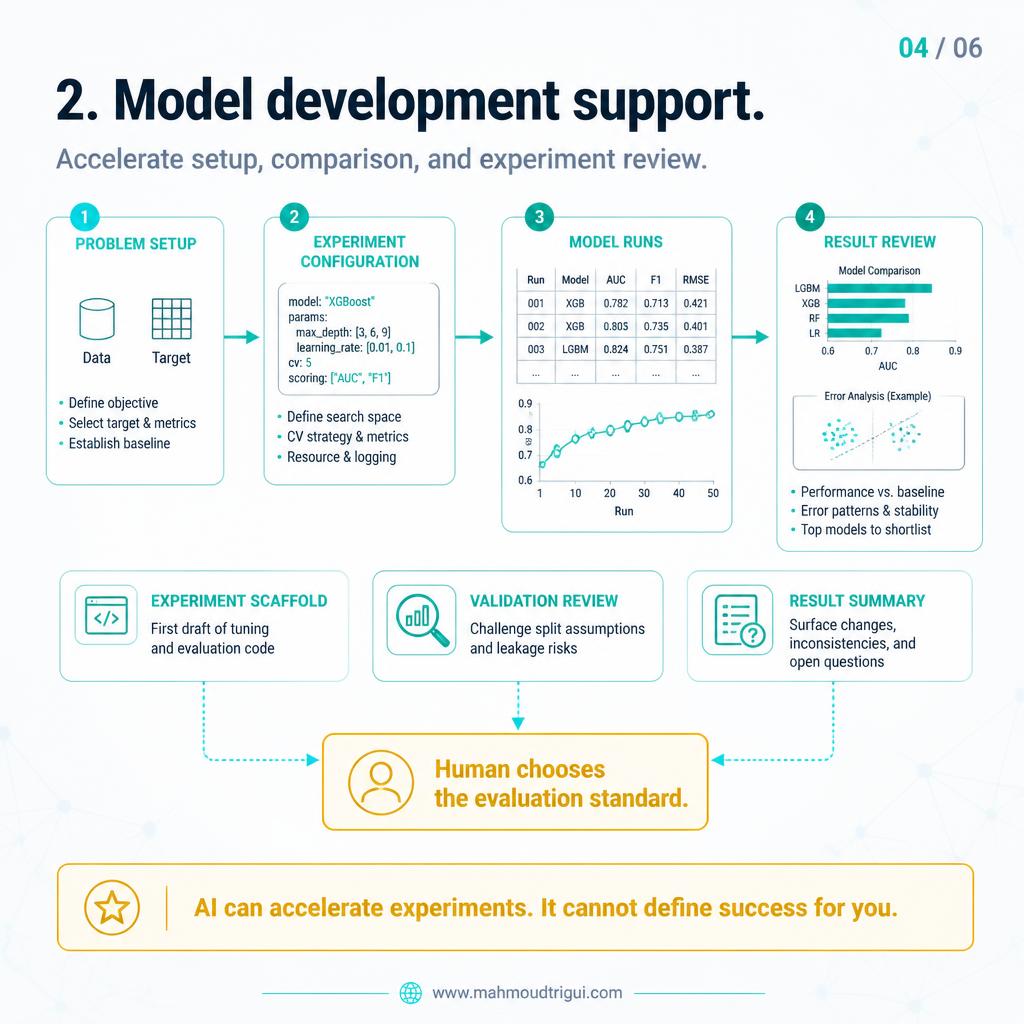
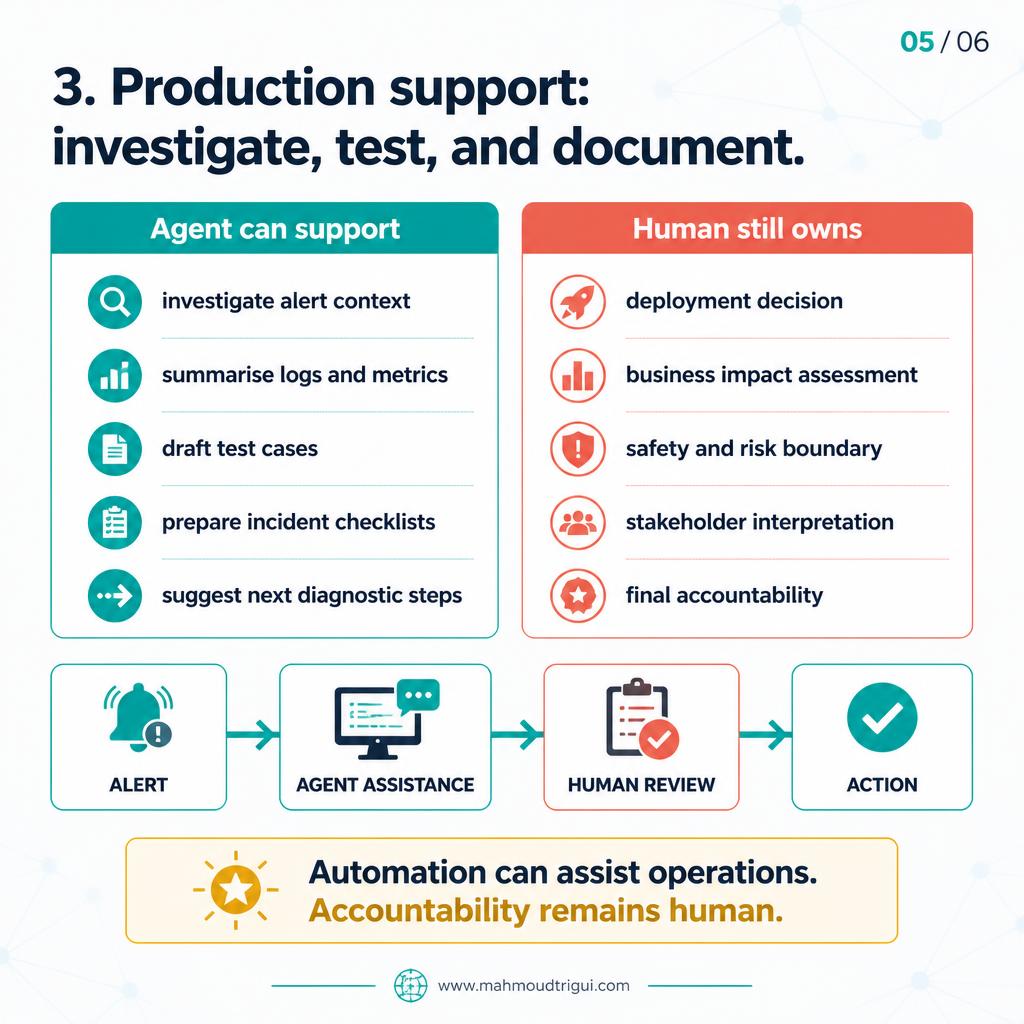
Keep humans owning decisions that define validity: the business question, observation unit, target definition, evaluation design, interpretation of results, and deploy/change/stop. Agents support: feature review/leakage flags, candidate features, Optuna scaffolds, validation review, experiment summaries, alert investigation, test cases, and incident checklists. The rule is simple: expert defines the problem → agent supports the work → evidence informs the decision → human owns the outcome.
Visual Summary
Outcome
Faster cycles without losing rigor. By constraining agents to support work around the hard decisions (and keeping those decisions human-owned), teams can accelerate exploration, execution, and review while improving the quality of decisions through better evidence.
Key Takeaway
Design insight: Agentic AI is a leverage layer around expertise — not a replacement. The strongest workflow is hybrid: expert defines the problem, agent supports execution and review, evidence informs the decision, and the human owns the outcome. When implementation becomes faster, judgment becomes more valuable.