Data Scientist to AI Engineer: What Actually Transfers
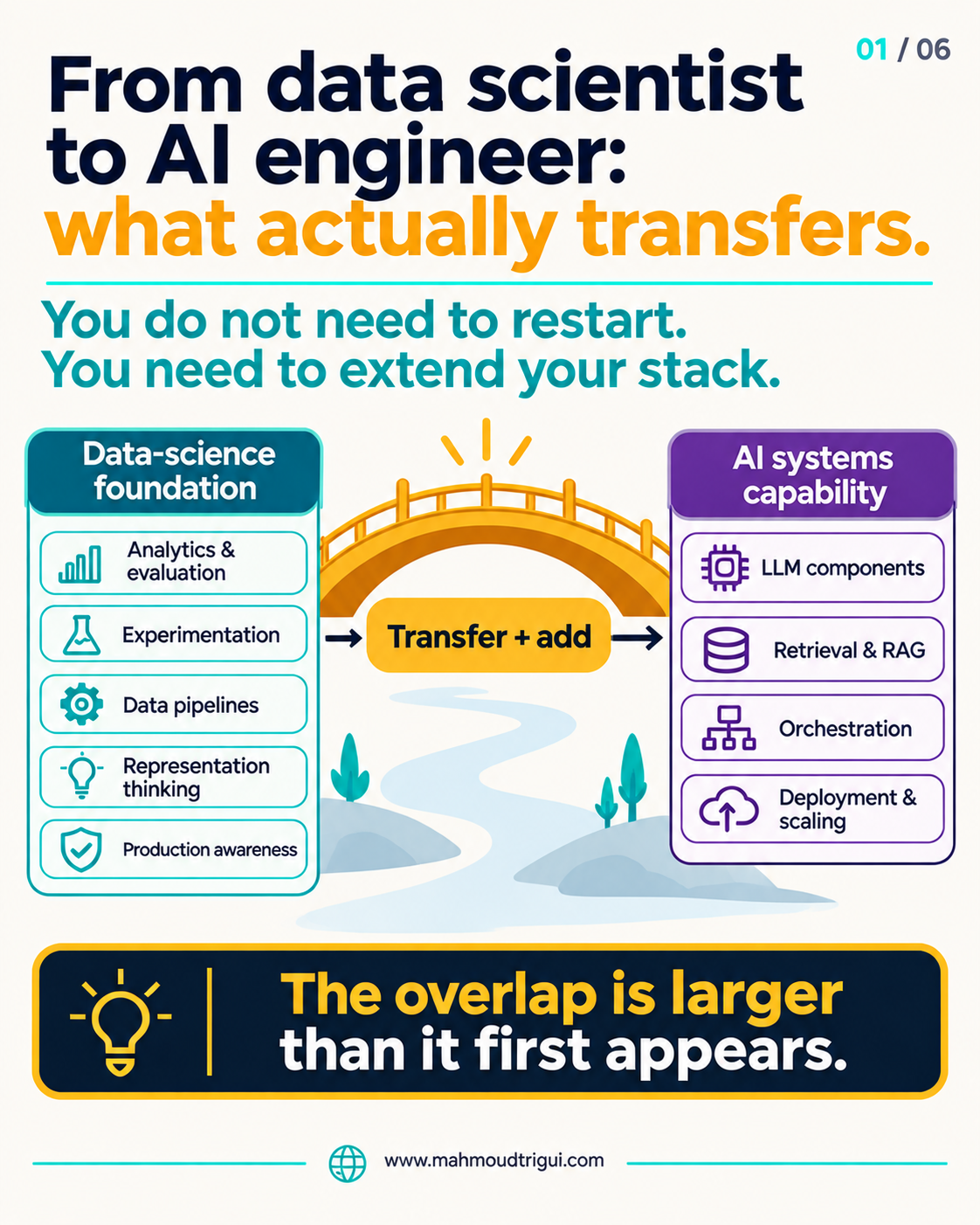
The move from data science to AI engineering is smaller than it looks. You do not abandon the analytical foundation — you keep it and add the engineering layer that sits around the model.
TL;DR: Moving from data scientist to AI engineer is not a career reset. Model evaluation, experimentation, data pipelines, representation thinking, and production awareness transfer directly — what you add is the engineering layer around the model: service boundaries, structured outputs, prompt and context management, retrieval, observability, cost controls, and fallback behaviour. Build one small end-to-end system that exercises the full lifecycle, and your existing analytical foundation becomes an advantage rather than something to leave behind.
Visual Summary
The Problem
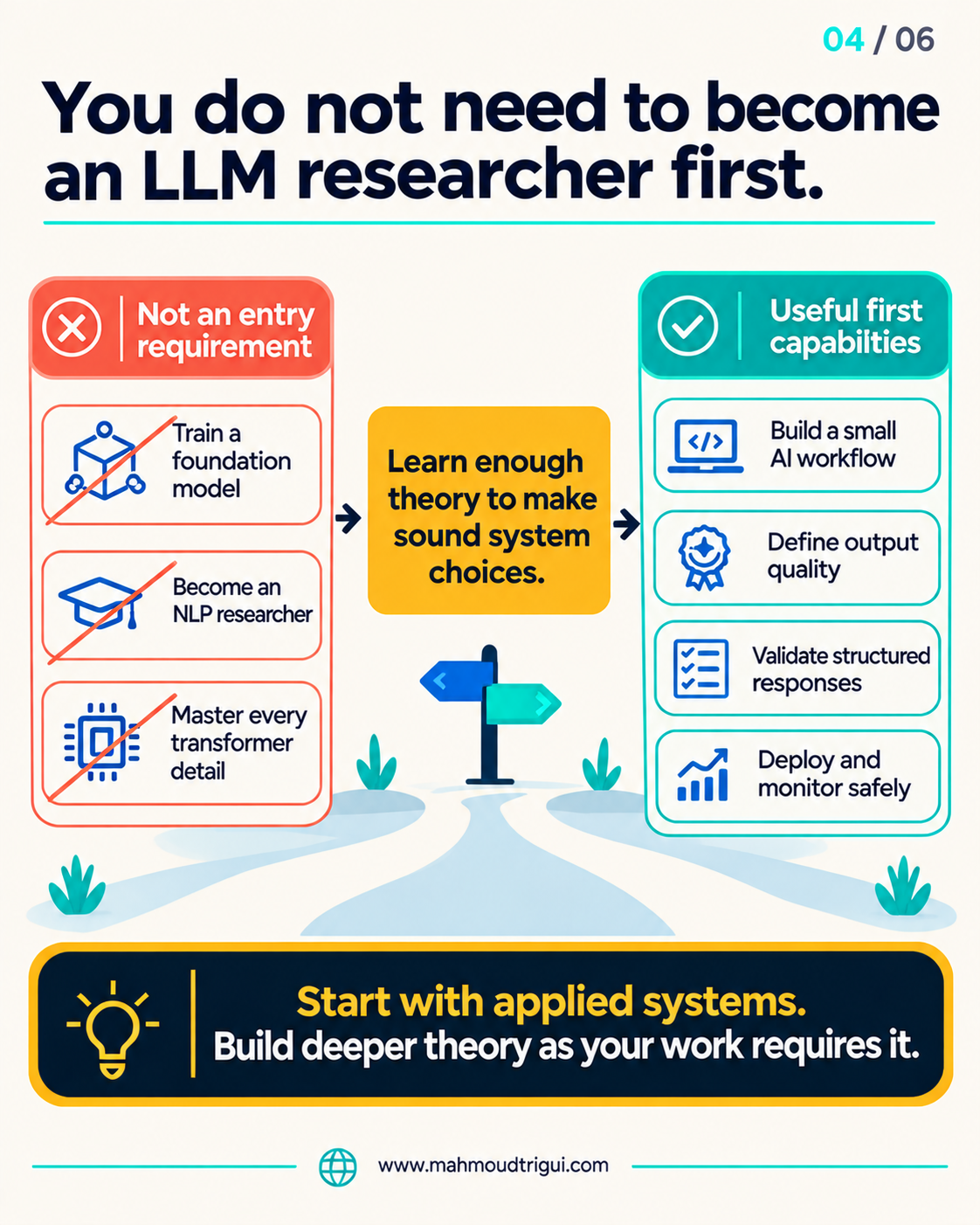
Most of the data scientists I talk to believe that moving toward AI engineering means starting over. The framing online is not helpful either: become a research engineer, memorise transformer internals, train a foundation model, then maybe you are allowed to build something useful. That story makes a strong analyst feel two years behind before they have written a line of code.
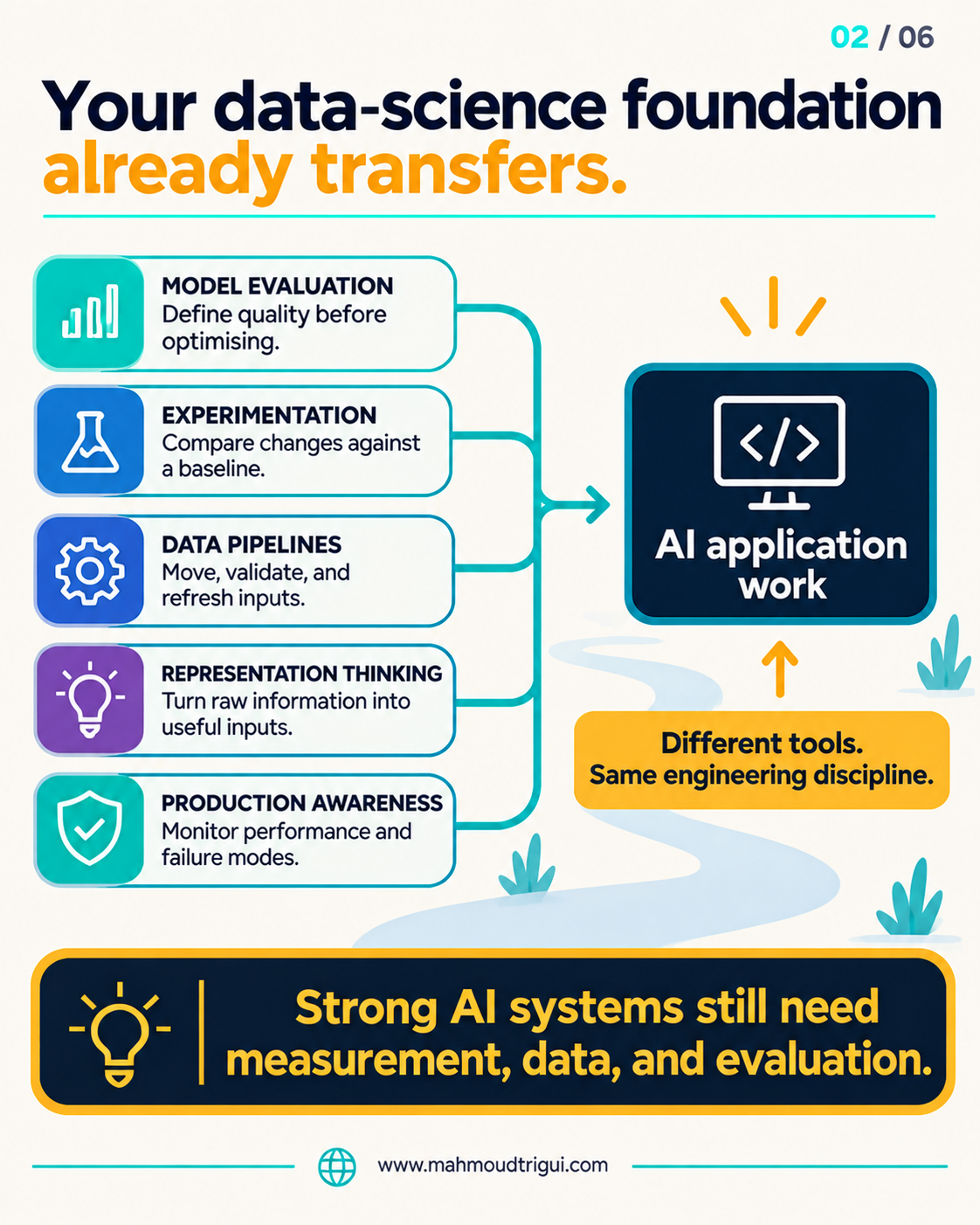
In practice the gap I see is not a knowledge gap in the core skills. Data scientists already evaluate models, design experiments, build pipelines, think carefully about representation, and carry production awareness. Those are exactly the disciplines LLM and AI systems still need. What is genuinely missing is the engineering layer that surrounds the model.
The Approach
I stopped treating this as a reinvention and started treating it as an extension. The first inventory is the part people skip: what already transfers, with little or no retraining.
Model evaluation discipline
Defining quality before optimising is the same job whether the system is a gradient boosted model or an LLM workflow. Most teams that struggle with AI quality never defined what good output looks like in the first place.
Experimentation and baseline thinking
Comparing a change against an honest baseline, and reducing a vague question to a measurable one, transfers directly. A prompt version is an experiment like any other.
Data and pipeline design
Moving, validating, and refreshing inputs is still the work — only now the inputs may be documents, embeddings, or retrieved context instead of a feature table.
Representation thinking
Turning raw information into useful inputs has a direct analogue. Prompt and context design is not identical to feature engineering, but the underlying question is the same: what representation makes the task easier?
Production awareness
Monitoring performance, watching failure modes, and assuming the system will be operated by someone else next quarter is the mindset that separates a demo from a service.
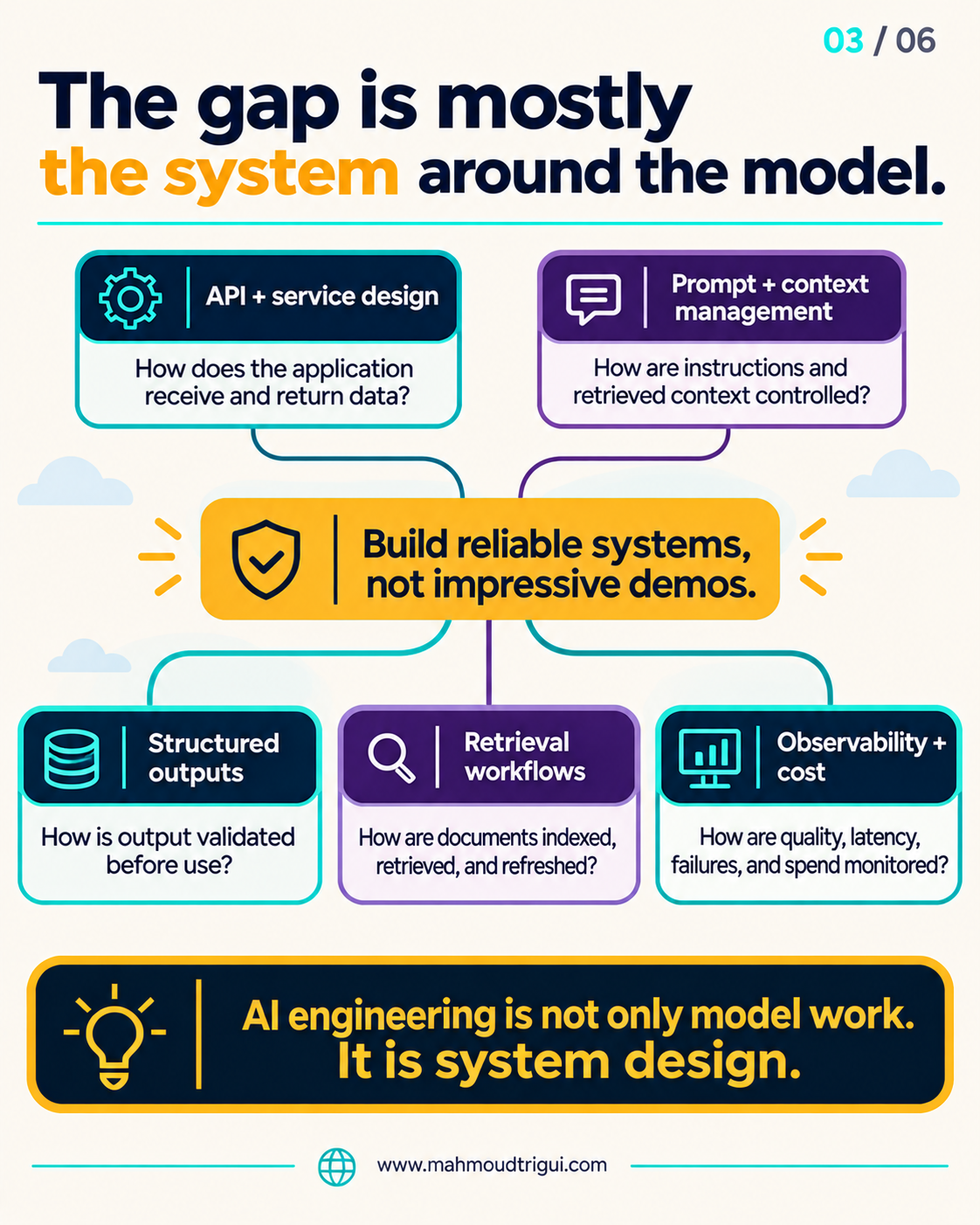
The addition is the surrounding engineering layer. This is the honest skill gap, and it is smaller than it looks — five capabilities cover most of it.
API and service design
How the application receives and returns data, and what its boundary looks like. A typed interface forces you to decide what the system actually promises.
Prompt and context management
How instructions and retrieved context are controlled, versioned, and changed safely over time instead of edited live in production.
Structured inputs and outputs
How the output is validated before anything downstream uses it. Schema-constrained responses remove the most fragile parsing logic around a probabilistic model.
Retrieval workflows
How documents are indexed, retrieved, refreshed, and kept fresh — and whether retrieval is even the right answer for this problem.
Observability and cost controls
How quality, latency, failures, and spend are monitored. Model routing and cost controls are design decisions, not billing surprises you discover later.
The point is not that every data scientist must train LLMs, become an NLP researcher, or master transformer internals before shipping anything. The point is learning enough about the system around the model to make good design and operational decisions.
The Path I Recommend
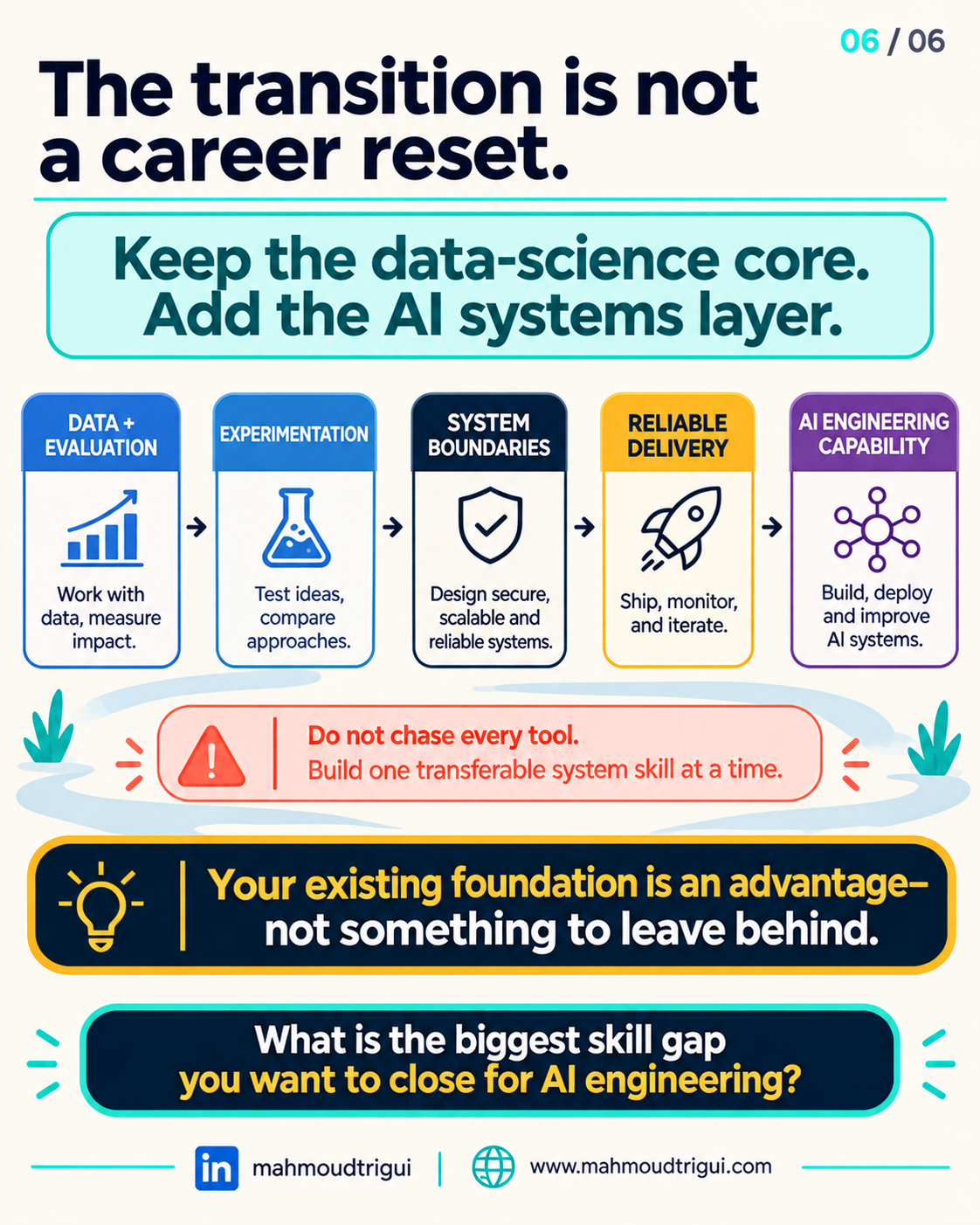
The transition I suggest is not data scientist → stop doing data science. It is data scientist → add AI systems skills to a strong analytical foundation. The hybrid profile — someone who can evaluate a model rigorously, understand the data, design an experiment, and also help build the service that delivers the result — is increasingly the valuable one.
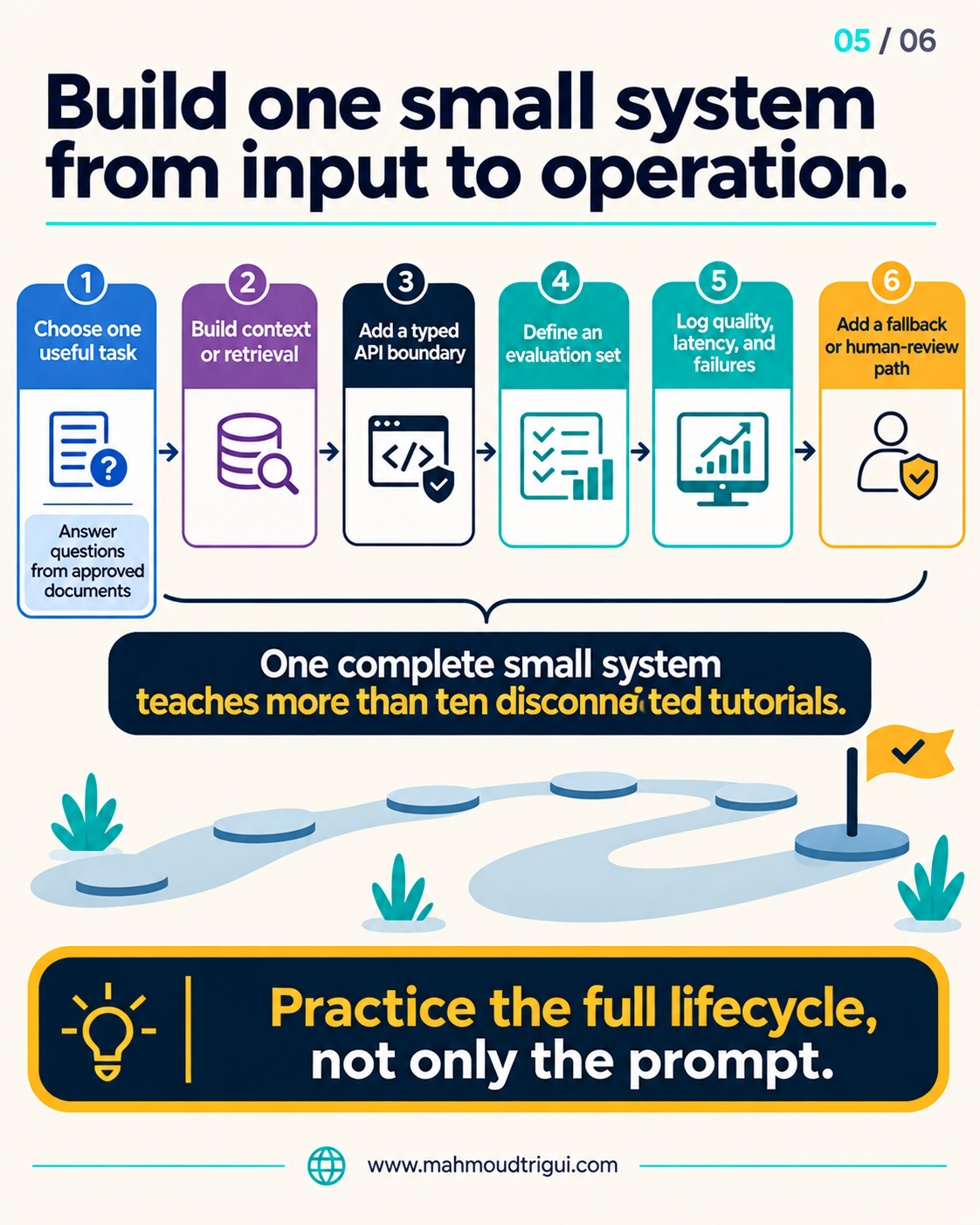
The fastest way to build it is one small end-to-end project rather than ten disconnected tutorials:
- Step 1: Build one retrieval or classification workflow.
- Step 2: Expose it through a typed API boundary.
- Step 3: Define an evaluation set and evaluate output quality.
- Step 4: Add logging, monitoring, and a fallback or human-review path.
Notice what that exercise forces: a real task, a real interface, a real measurement, and a real failure path. That combination teaches more than any course module on prompt technique.
Outcome
Reframing the move as an extension instead of a reset changes what you study and in what order. The skills that already transfer — evaluation, experimentation, pipelines, representation thinking, production awareness — stay at the centre. The engineering layer gets added around them, one capability at a time, on a system you actually built.
What I see in practice is that the people who make the move smoothly are not the ones who read the most about transformers. They are the ones who already measured things carefully and then learned enough about service design, structured outputs, observability, and fallback behaviour to ship something real. The overlap between the two roles is much larger than social media suggests.
Key Takeaway
Design insight: Moving from data scientist to AI engineer is not a career reset. Model evaluation, experimentation, data pipelines, representation thinking, and production awareness transfer directly — what you add is the engineering layer around the model: service boundaries, structured outputs, prompt and context management, retrieval, observability, cost controls, and fallback behaviour. Build one small end-to-end system that exercises the full lifecycle, and your existing analytical foundation becomes an advantage rather than something to leave behind.